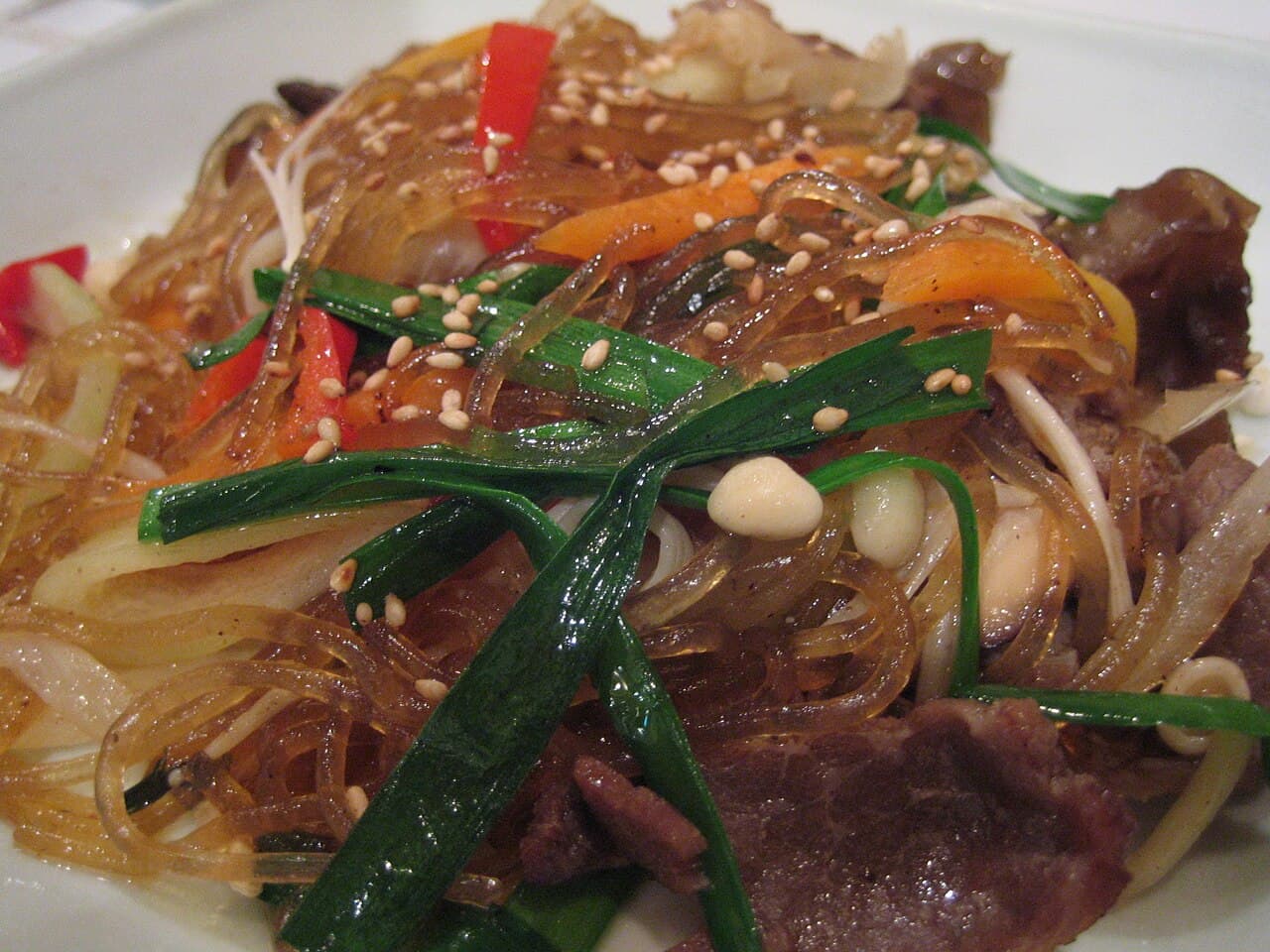
Japchae (Glass Noodles)
Japchae is clear sweet-potato glass noodles stir-fried with soy sauce, sugar, and sesame oil, then mixed with spinach, carrot, onion, wood-ear mushroom, and often beef and egg. The noodle is slippery sweet-potato starch. The same name can arrive as a small banquet side or as a main plate with rice.
Korean name잡채
Place and menu context
Japchae is sweet-potato glass noodles stir-fried with soy, sugar, sesame oil, vegetables, and often beef or egg. The same name can be a banquet side or a lunch main with rice—compare photo size, not only the word 잡채.
Choose the version
| Menu name | What changes | Before ordering |
|---|---|---|
| 잡채 · main | Larger plate sometimes sold with rice. | Read whether rice is on the same line. |
| 잡채 · side | Small portion beside other dishes. | Will not fill you as a solo meal. |
| 비빔국수 / noodle sets | Cold or mixed noodles on the same menu. | Different starch and serving temperature. |
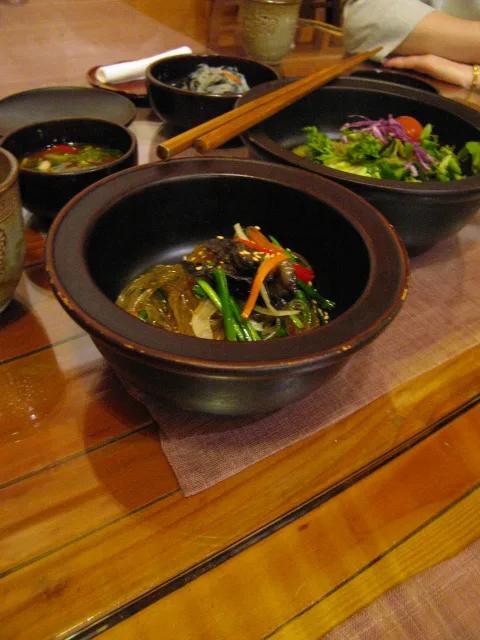
Marcel Ekkel · CC BY 2.0 · Source · Resized; converted to WebP; metadata removed; no crop
Main ingredients
- Sweet-potato glass noodles
- Soy sauce
- Sesame oil
- Spinach and carrot
- Wood-ear mushroom or onion
- Beef or egg
Heat and how it is cooked
The flavor is salty soy, sugar, and sesame oil. Chili is not what colors the dish. The kitchen usually stir-fries it before it comes to the table, so you are not cooking it yourself. A small side bowl and a lunch main can share the name and look completely different in size.
Easy to order alone?
A set that includes rice and is listed as one serving is easy to order alone. A restaurant that only sells a party platter may have no single portion. Look at the photo and see whether it is a small side dish or a full plate.
Phrases for the table
- 잡채 하나 주세요Readingjapchae hana juseyoMeaningOne japchae, please. Point at the line where it is listed as a main.
- 밥도 주세요Readingbapdo juseyoMeaningRice as well, please. Use this when the noodles look light and you want a bowl of white rice too.
- 소고기 빼 주세요Readingsogogi ppae juseyoMeaningPlease leave out the beef. Some restaurants can do that if the pan has not started yet.
The noodles clump as they cool. When the plate arrives, lift and loosen the whole portion so the sweet soy underneath does not stay in one corner.
Portions and the first order
잡채 하나 주세요 on the main line; ask 밥도 주세요 only when rice is not pictured. 소고기 빼 주세요 before the pan starts; a plated order may not change.
From the table to the first bite
Loosen the noodles when the plate arrives so sauce at the bottom distributes. Eat warm; glass noodles stiffen as they cool.
What to add
Bulgogi keeps the same sweet-salty beef direction without noodles. Gimbap offers sesame oil in a cold roll after a hot plate.
Published price examples
These are individual published examples, not a national average or a live quote. The source date and our check date are different. Check today's menu, minimum order and included items before ordering.
마지 (Maji)
오늘의마지 (우엉잡채)
₩11,000
- Order unit
- One named plate; daily special
- Minimum
- Not confirmed in source
- Included / extra
- Rice, sides and extras not explicitly itemized; confirm before ordering
- Area
- Seoul, Jongno-gu Chebu-dong
- Source date
- 2026-11-13
- Checked
Published example; confirm price and conditions before ordering.
Original source안동화련 (Andong Hwalryeon)
화련정식 (연근잡채 포함)
₩25,000
- Order unit
- One-person set; reservation required per article
- Minimum
- Not confirmed in source
- Included / extra
- Set includes 연근잡채 and multiple dishes; not a single side dish only
- Area
- Andong-si Iljik-myeon Gwimiri
- Source date
- 2020-02
- Checked
Published example; confirm price and conditions before ordering.
Original source곽가네음식 (Gwakgane Eumsik)
쌈밥정식
₩12,000
- Order unit
- One-person set
- Minimum
- Not confirmed in source
- Included / extra
- Temple-market restaurant set; 잡채 among multiple banchan per article
- Area
- Seoul, Jongno-gu
- Source date
- 2017-04
- Checked
Published example; confirm price and conditions before ordering.
Original source
Allergies and diet notes
Soy sauce and sesame oil are the base of the flavor. Some soy sauce contains wheat. Beef and egg are missing from some recipes and very common in others. The noodles themselves are sweet-potato starch. Wood ear and spinach are plants. Ask about 소고기 and egg before the pan starts, especially when japchae is a small side on a set menu.
Useful on the trip
Japchae printed in small type in the side-dish column will not fill you up. When you want it as a meal, choose the line that comes with rice and is listed as a main.
If you want something else
FAQ
Do the noodles contain wheat?
The clear noodles in japchae are generally sweet-potato starch. Wheat is more likely in the soy sauce. Check the noodles and the sauce separately.
Is it a spicy stir-fry?
The brown color comes from soy sauce and sugar. Set it beside a noodle dish in a red chili sauce and the two are easy to tell apart.
If a small plate arrives, is that the main?
A small plate is a side for the rice. Some restaurants also sell japchae as a main. The name can match while the amount does not.
If the beef is left out, what else should I ask about?
Soy sauce and oil can still use animal ingredients, and egg is common in the stir-fry. Ask about 소고기 빼 주세요 before cooking starts. A plate already plated may not change.
Do the clear noodles contain wheat?
The noodles are generally sweet-potato starch; wheat is more likely in the soy sauce. Check both when allergens matter.
References
- Andong japchae set meal · Korea Tourism Organization
Checked: