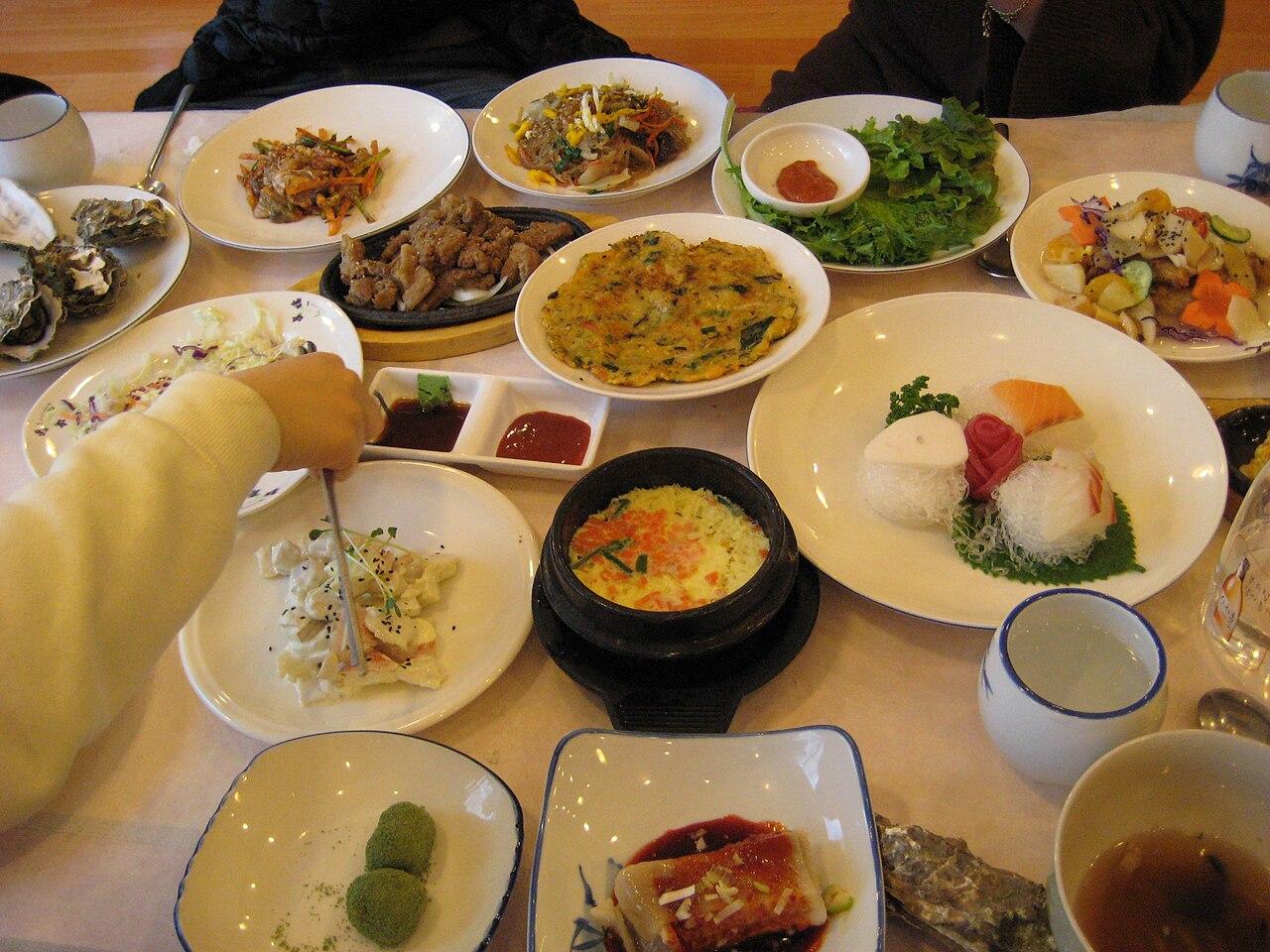
How to Order Food in Korea
Pointing at a photo is enough for plenty of orders. Party size, whether one person can sit, spice, allergies, takeaway, and card payment often never appear in that photo. The lines below fill those gaps. What a kitchen will change varies, and a request that is not on the menu can be refused.
What to do
Match the name to its unit
Find the price beside the exact dish, then look for 인분, g, 줄, 마리 or 소/중/대. The listed gram weight belongs to the stated portion, while a medium platter is a size tier, not automatically a meal for a fixed number of people.
Set the first order and the extras
Ask the minimum number of portions before taking a grill seat. For a bowl, check whether rice is included; for a shared pan, check noodles, cheese and finishing rice separately. Point to the option you want rather than saying yes to an unfamiliar list of additions.
Review the screen or repeat the order
At a kiosk, check dish, quantity, eat-in/takeaway and the total before confirming. A quantity that starts at two may be a menu condition or a screen setting: ask staff. If payment seems complete but no ticket appears, ask them to check the order before submitting it again.
Keep additions separate from the first bill
When adding food, name the item and count again, and ask the additional price. For takeaway, confirm the packaging and collection point. At payment, check the items and total; a card failure or language problem is a reason to ask for help, not to approve an unexplained second order.
What the menu unit changes about your order
| Menu wording | What it describes | Confirm before ordering |
|---|---|---|
| 1인분 / g | A portion or a stated weight, often used for meat | Minimum first order; grams per portion; additional-cut rules |
| 한 그릇 / 한 개 | One bowl or one item | Which toppings and rice, if any, belong to it |
| 한 줄 / 2줄 | One full roll or a two-roll bundle | Roll count, not the number of sliced pieces |
| 소 / 중 / 대 | Small, medium or large size within that shop | Price and contents; there is no universal serving count |
| 세트 / 2인 | A named set or a menu labelled for two | Total price versus per-person price; minimum; included dishes |
Korean for this situation
- 이 메뉴는 몇 인분이에요?How many portions is this menu item?
When to use it: A picture shows a large pan or platter without an obvious serving count.
Check first: This asks about the menu's portions, not whether your party can sit.
- 최소 몇 인분 주문해야 해요?What is the minimum number of portions I have to order?
When to use it: Before ordering meat or a shared pan.
Check first: Ask about the first order; later additions may follow another rule.
- 밥값은 별도예요?Is rice charged separately?
When to use it: A stew, meat plate or set does not make rice inclusion clear.
Check first: This asks about cost, rather than whether the rice comes in a separate bowl.
- 주문한 내용 확인해 주세요.Please check what I ordered.
When to use it: You are unsure of the quantity, options or whether the kiosk order went through.
Check first: Show the order screen or receipt; this is not a new food order.
- 포장해 주세요.Please make it takeaway.
When to use it: When ordering, before food is plated for dine-in.
Check first: Ask whether takeaway is available; hot pots and some sets may not be offered this way.
Situations and responses
Only Korean on a barbecue menu
You recognise 삼겹살 and a price, but cannot tell what you would be buying.
Point to the line and check grams per portion, the minimum first order and rice cost. PRICE-01 is a 150g example; it does not establish that one portion is the venue's minimum. Order only after the total quantity is clear.
A two-person set or one platter?
Your group compares 닭갈비 with a medium 족발 plate.
PRICE-53 is a half-chicken dakgalbi set explicitly labelled for two in its source; PRICE-84 is one medium jokbal order. Compare complete orders and included extras, not the two displayed numbers as if both were one person's bill. These are dated cases, not current quotes.
No ticket after a kiosk payment
The screen changes and the printer is quiet.
Keep the screen or payment information available and ask staff to confirm the order. Do not immediately place the same food in a second basket. Follow the staff's collection instructions after they locate the order.
Food examples
These photographs illustrate food or serving formats. They do not establish ingredients, allergy safety, local availability or a shop's current portion.
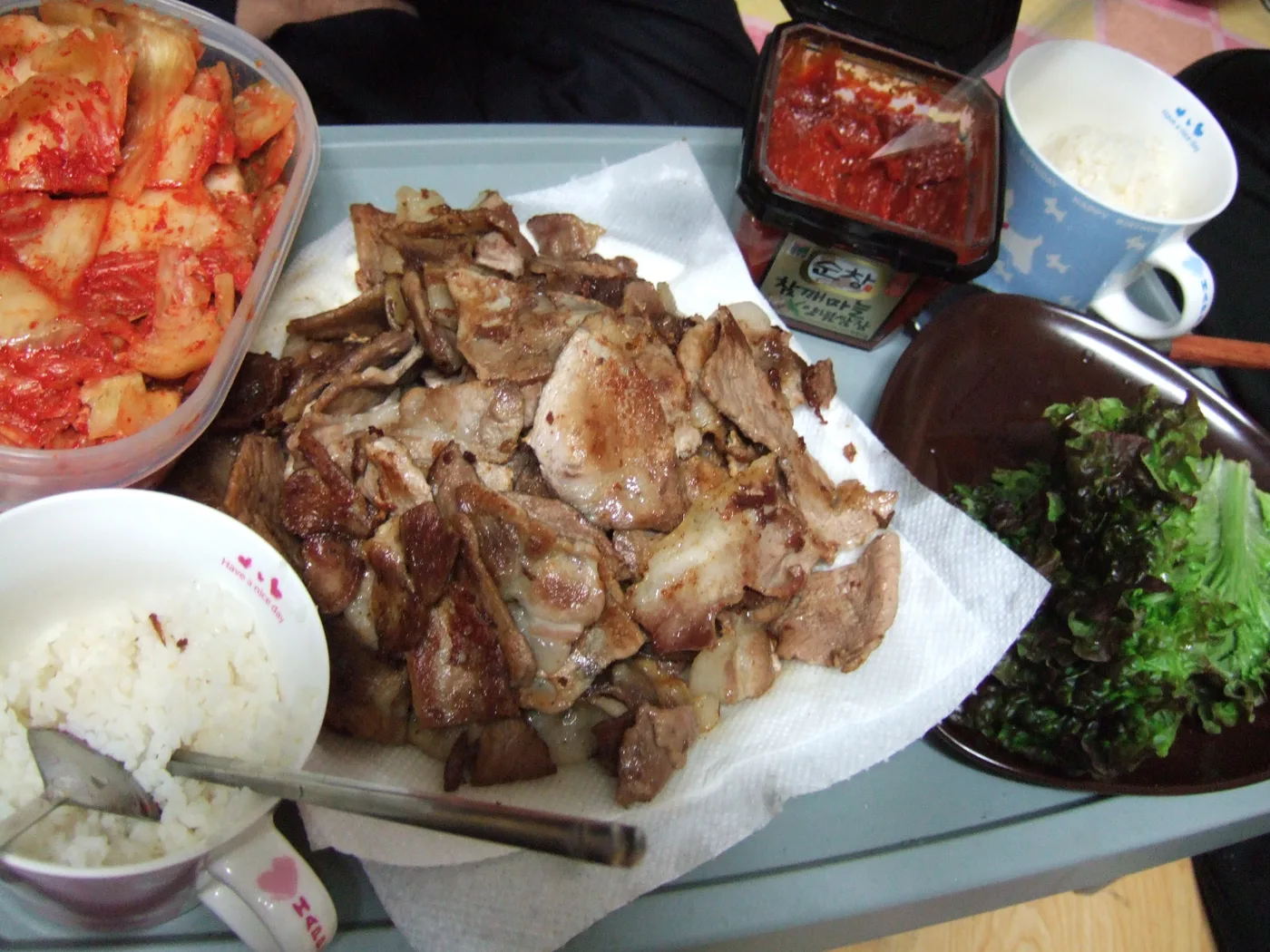
정희 강 · CC BY 2.0 · Source · Resized; converted to WebP; metadata removed; no crop
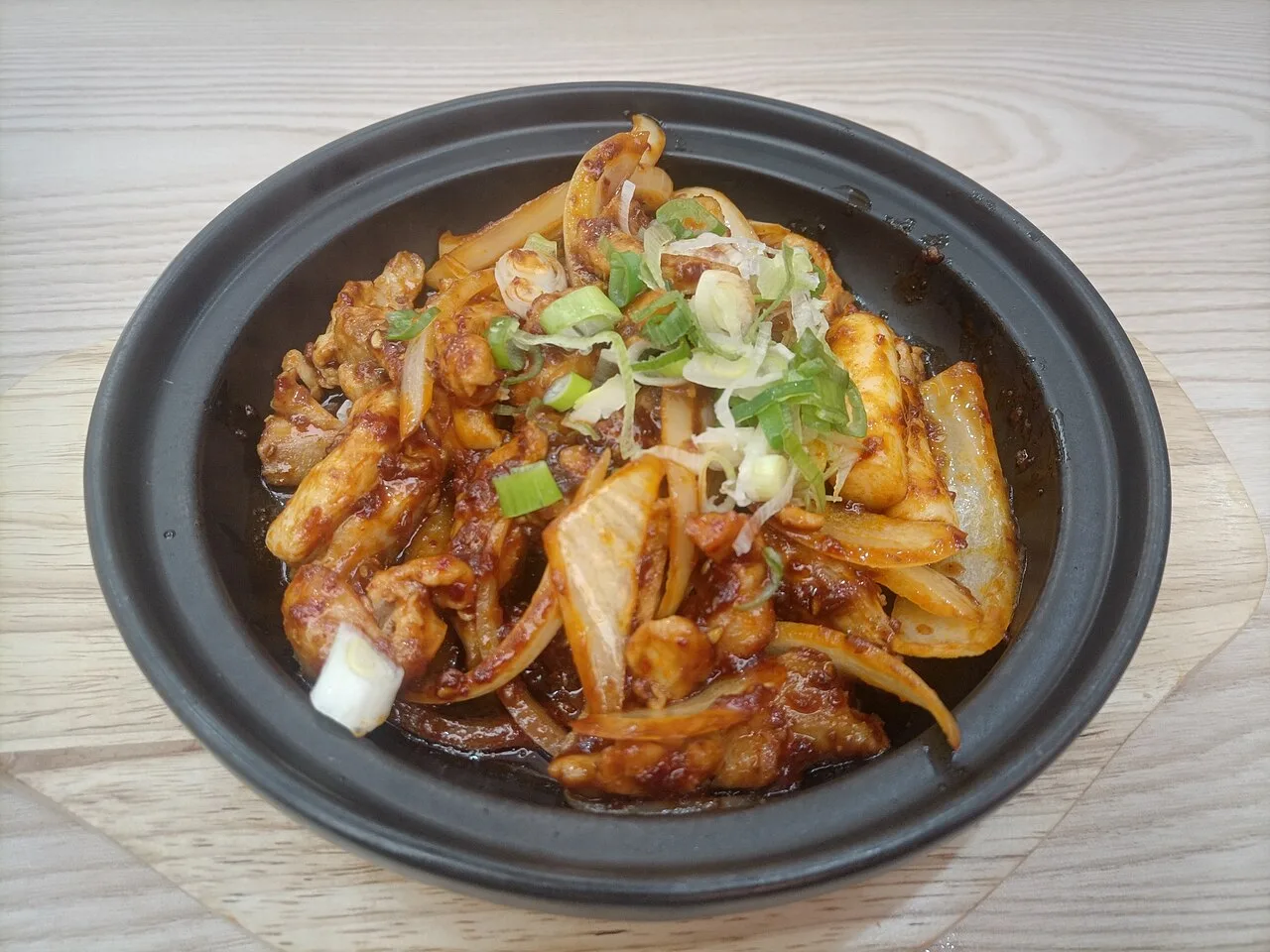
Fumikas Sagisavas · CC0 1.0 · Source · Resized; converted to WebP; metadata removed; no crop
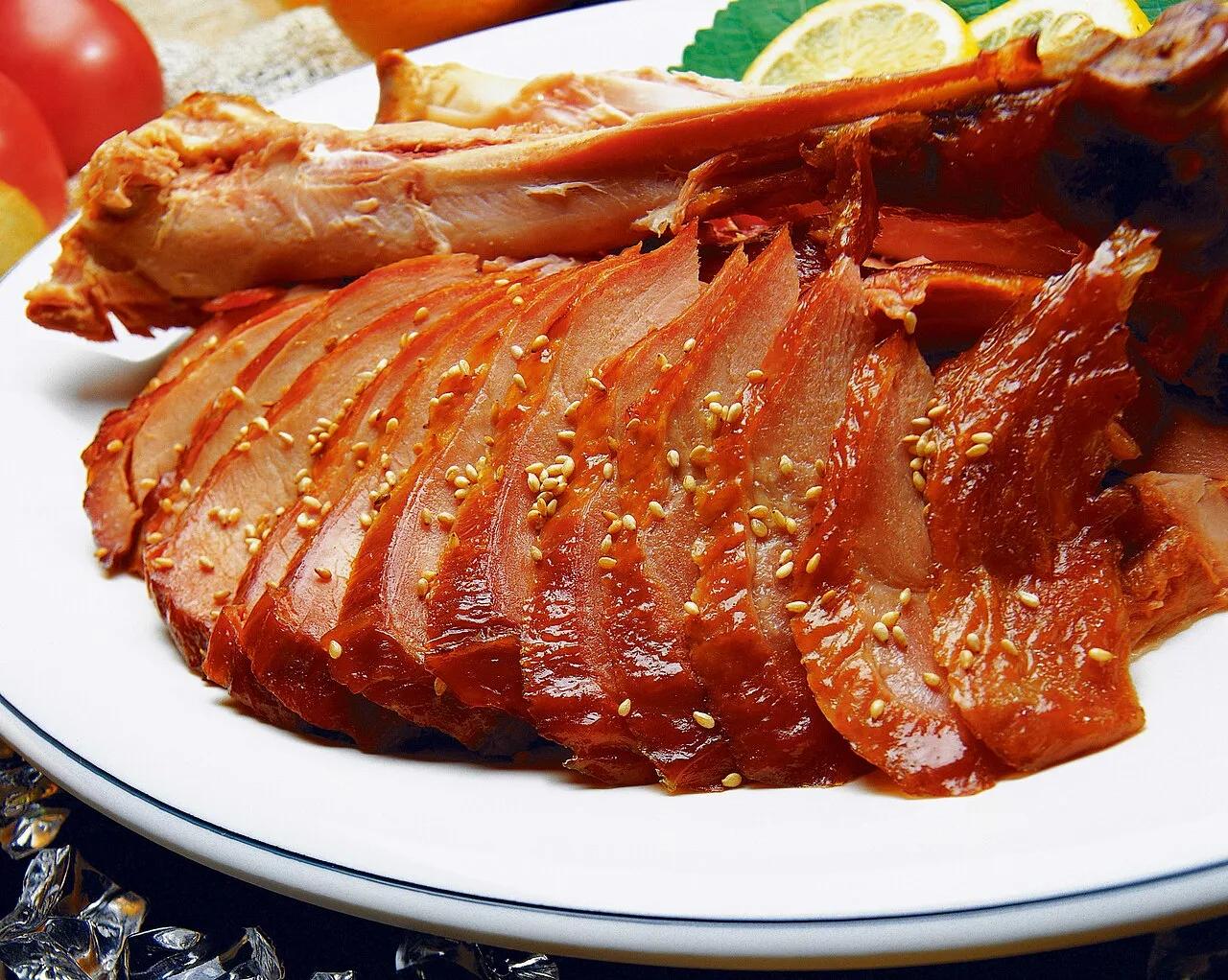
wizdata · CC0 1.0 · Source · Resized; converted to WebP; metadata removed; no crop
Published menu examples
Individual source examples, not a current quote or nationwide average. Check the source date, unit, minimum order and extras; a posted price does not establish today's opening hours.
청돈옥 (Cheongdonok)
Samgyeopsal (Korean Grilled Pork Belly)
240시간 교차숙성 삼겹살
₩15,000
- Order unit
- 150 g
- Minimum
- Not confirmed in source
- Included / extra
- Rice, sides and extras not individually confirmed
- Source location
- Seoul, Mapo-gu
- Source date
- Page dated 2026-07-03; price-update date unknown
- Checked
Published example; confirm price and conditions before ordering.
Original source계륵 (Gyeryuk)
Dakgalbi (Spicy Stir-fried Chicken)
소금 닭반마리(2인)
₩50,000
- Order unit
- Half-chicken salt dakgalbi set for 2 persons (menu name)
- Minimum
- 2 persons as stated in menu name
- Included / extra
- Rice, sides and extras not explicitly itemized; confirm before ordering
- Source location
- Chuncheon-si Namsan-myeon, Gangwon-do
- Source date
- Price date unknown
- Checked
Salt-grill whole/half-chicken style; not the same per-person griddle line as Chuncheon 명동 shops. Confirm before ordering.
Original source성수족발 (Seongsu Jokbal)
Jokbal (Braised Pig's Trotters)
족발(중)
₩45,000
- Order unit
- Medium jokbal order
- Minimum
- Not confirmed in source
- Included / extra
- Rice, sides and extras not explicitly itemized; confirm before ordering
- Source location
- Seoul, Seongdong-gu Seongsu-dong
- Source date
- Price date unknown
- Checked
Published example from Seongsu Jokbal (1 venue). Medium/large/extra-large lines are size tiers on the same official menu, not three separate businesses.
Original source
Before you order
- Exact menu name and variant selected, not just a similar photo
- Portion, weight, roll count or platter size understood
- First-order minimum confirmed for the whole table
- Rice, noodles, cheese and set inclusions checked individually
- Dine-in or takeaway chosen before preparation
- Basket quantity and total checked before confirmation
- A completed payment/order checked with staff before retrying
Questions travelers ask
Can I order by pointing without speaking Korean?
Pointing can identify the dish, but also state the count and ask about the unit and minimum. A photo cannot answer whether a price is per person, per pot or per weight.
Does 1인분 mean I can buy exactly one portion?
It names the portion unit. A venue may still set a larger first-order minimum or a separate solo-seating rule. Ask both questions before ordering.
Does a set include rice and side dishes?
Read the named set and ask about rice, soup and extras separately. The same word 세트 does not guarantee the same contents in another restaurant.
What if the kiosk starts at a quantity of two?
Do not assume the machine is wrong or that two is a universal rule. Check whether the quantity can change, then ask staff what the menu requires before paying.
Can I ask for less heat or leave an ingredient out?
Ask before preparation. A ready-made sauce, broth or filling may not be changeable. For an allergy, use the dedicated allergy guide and ask about stock, sauces and shared preparation as well as toppings.
Can I use these price examples as today's budget?
They explain units and documented cases with sources and check dates. They are not live prices; confirm the current minimum, inclusions and total before ordering.
Continue with a specific dish or area
References
- About Korean Food: Visiting a Korean restaurant · Korea Tourism Organization
Checked: 2026-11-24 - Chuncheon dakgalbi · Korea Tourism Organization
Checked: 2026-11-24 - Visit Seoul: Seongsu Jokbal menu · Seoul Metropolitan Government
Checked: 2026-11-24
More dish notes and earlier phrase examples
One person orders bibimbap. The staff line is something you may hear at some restaurants. Places do not all follow this order. No restaurant name is included.
A short exchange in the restaurant
- You한 명이요Readinghan myeong-iyoMeaningOne person.
- You비빔밥 하나요Readingbibimbap hanayoMeaningOne bibimbap.
- You고추장 따로 주세요Readinggochujang ttaro juseyoMeaningChili paste on the side, please.
- You물 좀 주세요Readingmul jom juseyoMeaningWater, please.
- Staff여기 넣어 주세요Readingyeogi neoeo juseyoMeaningPlease insert it here. You may hear this when they turn the card reader toward you.
- You카드로 할게요Readingkadeuro halgeyoMeaningI will pay by card.
- You영수증 주세요Readingyeongsujeung juseyoMeaningA receipt, please.