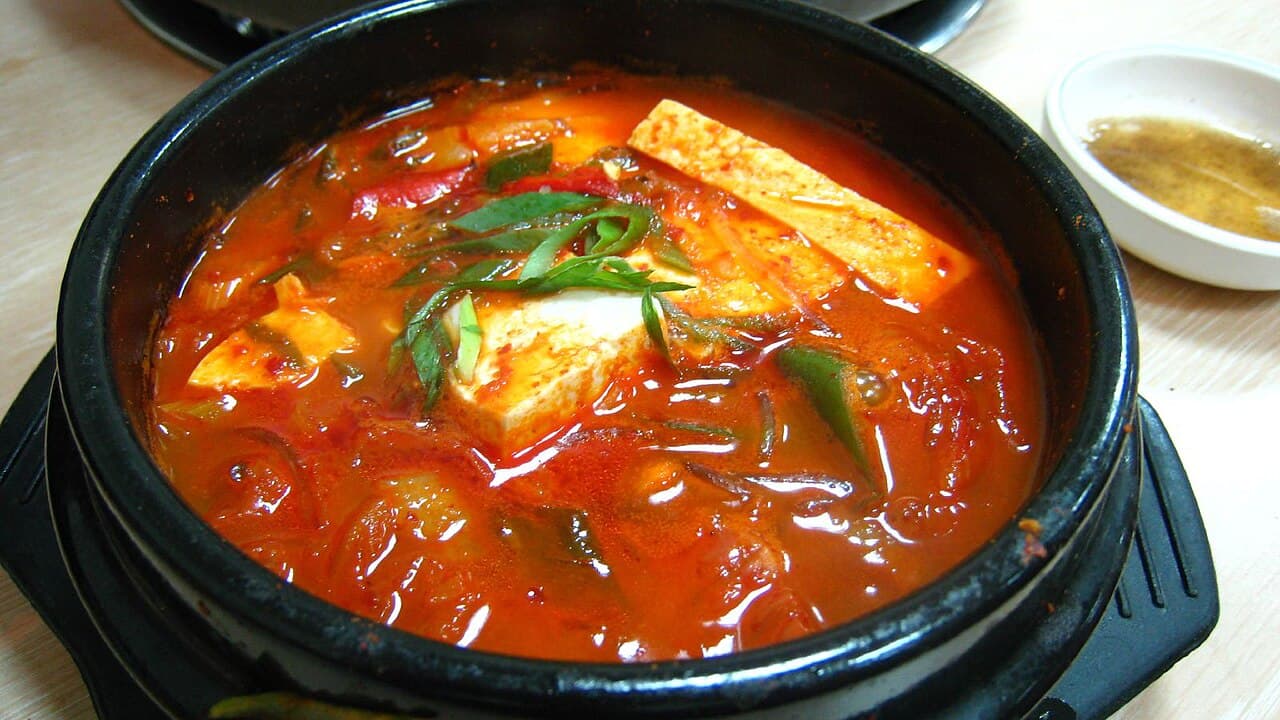
Kimchi-jjigae (Kimchi Stew)
Kimchi-jjigae uses kimchi that has fermented enough to taste sour, simmered with chili. Tofu and onion are common, and so is pork. Some restaurants use ham or tuna instead. The pot is often red, like sundubu-jjigae. The first spoonful here is the kimchi's sourness. In sundubu, the first sensation is the soft tofu.
Korean name김치찌개
Place and menu context
Kimchi-jjigae cooks ripe, sour kimchi with tofu and often pork, ham, or tuna in a red pot. Sundubu leads with soft tofu; here the first note is fermented kimchi. Rice usually sits outside the pot. Removing pork does not remove fish sauce or shrimp paste from the kimchi base.
Choose the version
| Menu name | What changes | Before ordering |
|---|---|---|
| 돼지·햄 김치찌개 | Pork or ham as the meat line. | Point at pork vs tuna rows separately. |
| 참치 김치찌개 | Tuna topping over the same stew base. | Seafood is explicit on this line. |
| 순두부찌개 | Soft-tofu stew, not kimchi-led. | Red colour alone does not decide the dish. |
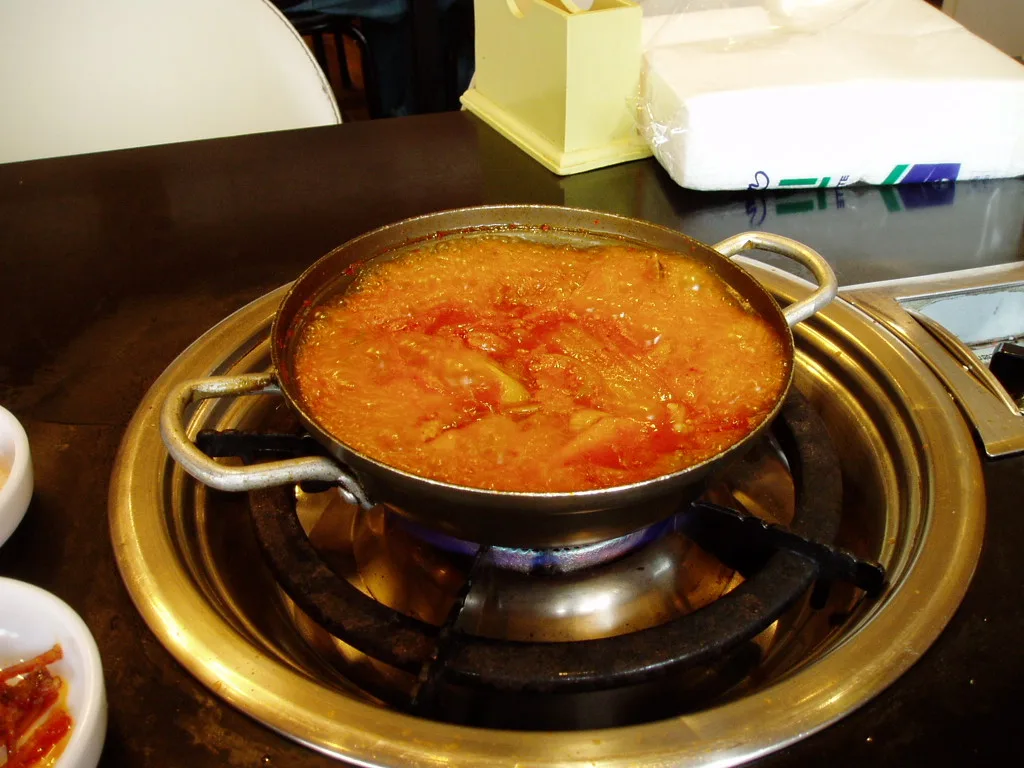
pcamp · CC BY 2.0 · Source · Resized; converted to WebP; metadata removed; no crop
Main ingredients
- Fermented kimchi
- Chili
- Tofu
- Pork or ham
- Onion
- Rice, usually in a separate bowl
Heat and how it is cooked
A red personal pot is spicy from the start. What makes you pause can be the chili, or the kimchi's sourness and salt stacked together. The same restaurant can taste more or less sour on a day when the kimchi is younger and on a day when it is well fermented. Asking for less heat works in some kitchens that can adjust the pot on the spot. A broth that is already cooked may be impossible to change.
Easy to order alone?
Many restaurants serve this in a one-person earthen pot or stone pot, so it is a natural order on your own. The rice is usually outside the pot. A pot on the table does not mean the rice is already in the broth. Sharing one pot between two people is uncommon for this stew.
Phrases for the table
- 김치찌개 하나 주세요Readinggimchi-jjigae hana juseyoMeaningOne kimchi-jjigae, please. If pork and tuna are separate lines, point at the line you want.
- 공기밥 주세요Readinggonggibap juseyoMeaningA bowl of rice, please. Use this when the pot comes first and rice is written separately on the menu.
- 돼지고기 빼 주세요Readingdwaejigogi ppae juseyoMeaningPlease leave out the pork. Kimchi itself often includes seafood paste, so removing the meat still leaves that in the pot.
Cooked kimchi tastes sourer than the raw kimchi in a small side dish. If you set the stew aside only because of the heat, you may realize later that the sourness was the part you wanted to skip. Taste the broth early.
Portions and the first order
김치찌개 하나 주세요 when one person pot is shown. Ask 공기밥 주세요 if rice is a separate line. For pork out, say 돼지고기 빼 주세요 before the pot boils; seafood in kimchi still needs a direct question.
From the table to the first bite
Taste a small spoon of broth before ladling over rice—the rim is hotter than it looks. Stone handles may fold inward. A little broth on rice at a time keeps salt and sourness under control.
What to add
Rice is the natural partner; extra fried rice is a heavy second starch. Sundubu shares a red pot shape but different texture. Tteokbokki trades broth for chewy rice cakes in sauce.
Published price examples
These are individual published examples, not a national average or a live quote. The source date and our check date are different. Check today's menu, minimum order and included items before ordering.
청년밥상 문간 (Youthmungan)
김치찌개
₩4,000
- Order unit
- One jjigae order
- Minimum
- Not confirmed in source
- Included / extra
- Article notes optional paid add-ons for tofu/meat; unlimited refill rice stated
- Area
- Seoul, Seongbuk-gu
- Source date
- 2026-06-24
- Checked
Published example; confirm price and conditions before ordering.
Original source돈블랑 판교역점 (Don Blanc Pangyo)
生돼지 김치찌개
₩11,000
- Order unit
- One named jjigae menu order
- Minimum
- Not confirmed in source
- Included / extra
- Rice, sides and extras not explicitly itemized; confirm before ordering
- Area
- Seongnam, Bundang-gu Baekhyeon-dong
- Source date
- Price date unknown
- Checked
Published example; confirm price and conditions before ordering.
Original source돈블랑 청담스퀘어점 (Don Blanc Cheongdam Square)
生돼지 김치찌개
₩12,000
- Order unit
- One named jjigae menu order
- Minimum
- Not confirmed in source
- Included / extra
- Rice, sides and extras not explicitly itemized; confirm before ordering
- Area
- Seoul, Gangnam-gu
- Source date
- Price date unknown
- Checked
Published example; confirm price and conditions before ordering.
Original source
Allergies and diet notes
Kimchi is napa cabbage, chili, and garlic, and it often includes fish sauce or shrimp paste. Pork, ham, and tuna are extra toppings on top of that. Tofu and soy sauce bring soy, and sesame oil is common. Broth thickened with gochujang can include wheat. Removing pork does not remove seafood from the kimchi—ask about both 돼지고기 and the kimchi base when you order.
Useful on the trip
The first taste should be a small spoon of broth, so you know the sourness before you ladle it over rice. The rim is hotter than the surface. Some stone-pot handles fold inward, so look before you move the pot.
If you want something else
- Sundubu-jjigae (Soft Tofu Stew)Choose this when you want a red stew whose main texture is tofu that falls apart, after a sour kimchi pot. The heat shows up differently.
- Tteokbokki (Spicy Rice Cakes)Choose this when you want rice cakes in a sweet-spicy gochujang sauce, and you want to skip sitting down with a bowl of broth.
- Kimchi Fried RiceThis is the same ripe kimchi, fried into a plate of rice. Read it when you want the kimchi and want to leave the broth behind.
FAQ
How is this different from kimchi served as a side dish?
The small dish of kimchi accompanies rice. This stew cooks that fermented kimchi into the main, with tofu and meat. The sourness is usually clearer after it has been simmered.
Is this the same as sundubu-jjigae?
Sundubu-jjigae is led by soft tofu that has not set into cubes. Kimchi-jjigae is led by sour kimchi. Both pots may be red. Use the name on the menu to keep them apart.
Can I order it without pork?
Some restaurants can leave the pork topping out. The kimchi is often made with fish sauce or shrimp paste, so a pot without pork can still contain seafood. Say 돼지고기 빼 주세요 and ask whether the kimchi itself is seafood-free if that matters.
Is the rice in the pot?
It usually arrives outside the pot. A small bowl may come with the stew, or you may need to ask for 공기밥. Check whether the menu lists rice on its own line.
Is rice cooked inside the stew?
Usually rice arrives in a separate bowl. A pot on the table does not mean rice is already mixed in; check the menu for 공기밥.
References
- K-Foods in K-Dramas · Korea Tourism Organization
Checked: