Korean Restaurant Etiquette
This page covers what happens between sitting down and leaving. Some tables already hold side dishes, some rooms have water you pour yourself, and some meals end at a counter by the door. One pattern is not a rule for every restaurant.
What to do
Find the table's service arrangement
A visible side drawer may hold spoons and chopsticks. A labelled station may supply water or refills; if you cannot identify it, ask before entering staff-only areas. Korean tourism guidance describes these common conveniences, but not every table has them.
Distinguish banchan from another order
Small dishes can arrive with a meal. Before asking for more, identify the item and whether the restaurant uses a self-service station or staff service. An extra main dish or special side on the menu should not be treated as a free refill simply because its plate is small.
Share food without sharing raw-meat tools
Use serving tools when provided and put a manageable portion on your own plate. Keep utensils used for raw meat separate from cooked-food utensils; ask for clean ones if needed. Leave a hot stone bowl or burner on the table and ask staff to adjust equipment you do not understand.
Follow the venue's payment flow
Check whether payment happens at the kiosk/counter first or after the meal. Ask about separate payments before the transaction begins. Ordinary tipping is not generally expected; a printed service or table-setting fee is a different charge and should be checked on the bill.
Similar-looking extras can have different conditions
| At the table | How to interpret it | Useful action |
|---|---|---|
| Banchan supplied with the meal | An accompaniment; refills follow this venue's arrangement | Ask which items can be refilled and whether you serve yourself |
| Extra rice / a named side dish | May be another menu item rather than a refill | Ask the price before adding it |
| Water station / sealed bottle | A dispenser and an ordered bottle are different offers | Check the sign or menu before opening a bottle |
| 상차림 | A separate table-setting charge at some venues | Ask who is charged and what is included |
| Separate payment | A request that the staff or terminal may not support | Ask before anyone pays; agree a fallback with your group |
Korean for this situation
- 저기요.Excuse me.
When to use it: Calling staff from your table when there is no clear service signal.
Check first: Use a normal voice and wait for acknowledgement; do not keep pressing a bell.
- 반찬 더 주세요.More side dishes, please.
When to use it: Pointing to the particular banchan you want replenished.
Check first: Ask about the arrangement and any charge; not every plate is a refill item.
- 이 반찬은 추가 요금이 있어요?Is there an extra charge for this side dish?
When to use it: Before accepting an additional or unfamiliar plate.
Check first: Point to the item so staff do not mistake it for a request for every side.
- 물은 셀프예요?Is water self-service?
When to use it: You see a station or notice but do not know whether to use it.
Check first: This asks about service, not whether a bottled drink is free.
- 따로 계산할 수 있어요?Can we pay separately?
When to use it: Before the staff starts taking payment for your group.
Check first: Explain the intended split; it may not be supported, so agree another arrangement.
Situations and responses
No water or chopsticks have arrived
Your food is on the table, but you are unsure what you should fetch.
Look for a visible utensil drawer and a marked water station. If neither is clear, ask rather than opening random cupboards or walking into the kitchen. Use the restaurant's service arrangement, not a rule remembered from another venue.
A different bill from a similar barbecue
Your group expects rice, stew and table-setting to be included everywhere.
PRICE-03 records certain side dishes but leaves rice unknown; PRICE-04 mentions kimchi stew with meat; PRICE-05 has a separate table-setting charge and a weight minimum. These are different published cases. Ask about the current contents and fees rather than applying one restaurant's conditions to another.
The group wants to split the bill
Friends are already holding out several cards.
Ask first whether separate transactions are possible, then explain the intended amounts or items. If the venue cannot do that, agree another way within the group before paying. Check the total and ask for a receipt if needed; no automatic tipping percentage is added by this guide.
Food examples
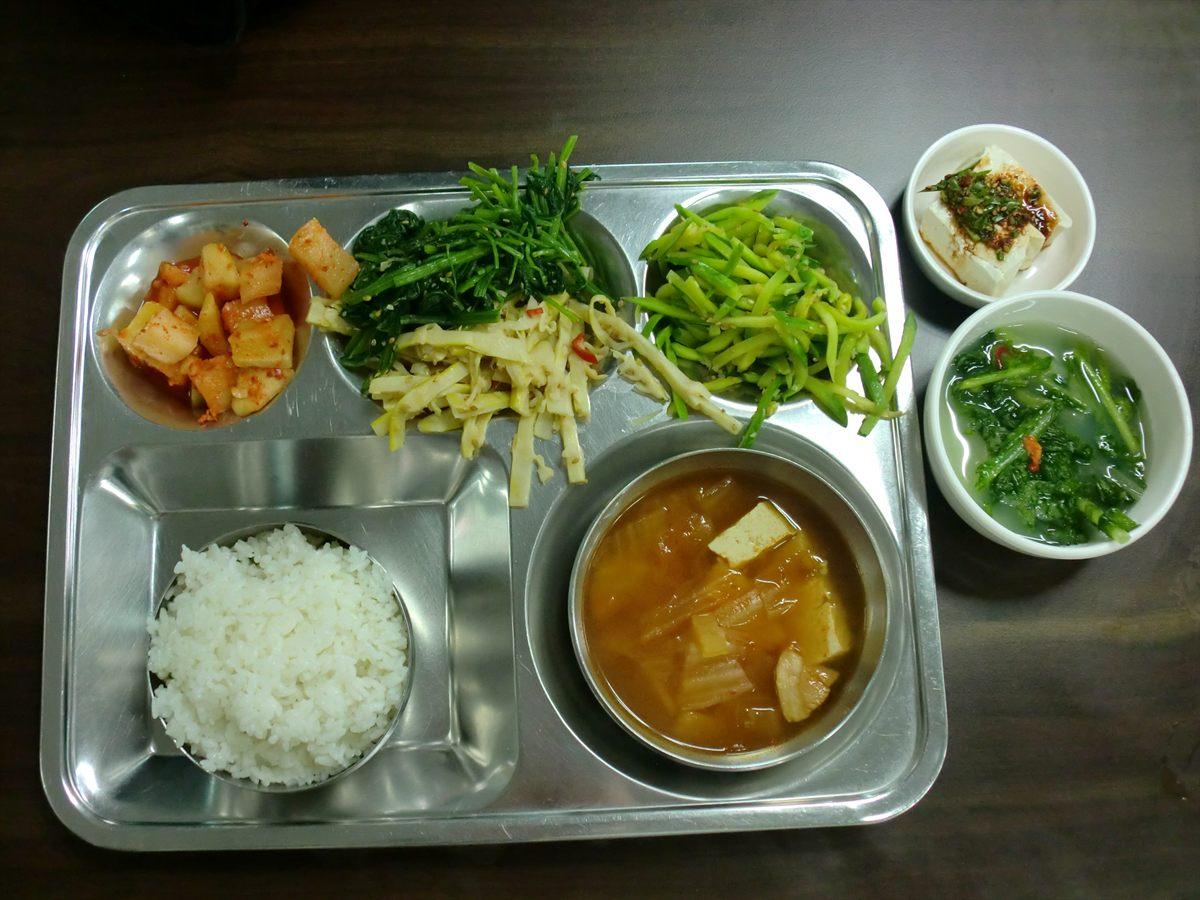
These photographs illustrate food or serving formats. They do not establish ingredients, allergy safety, local availability or a shop's current portion.
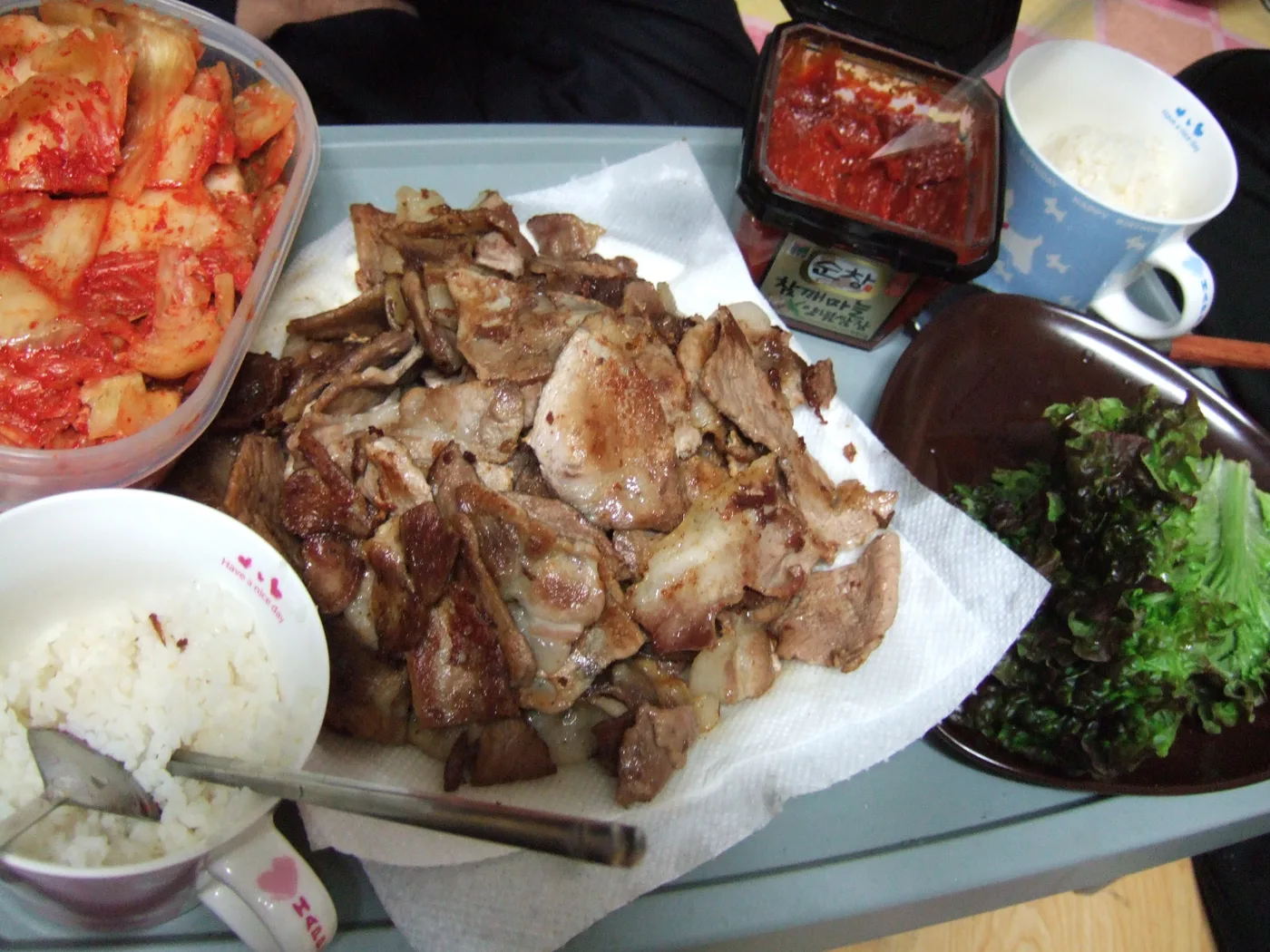
정희 강 · CC BY 2.0 · Source · Resized; converted to WebP; metadata removed; no crop
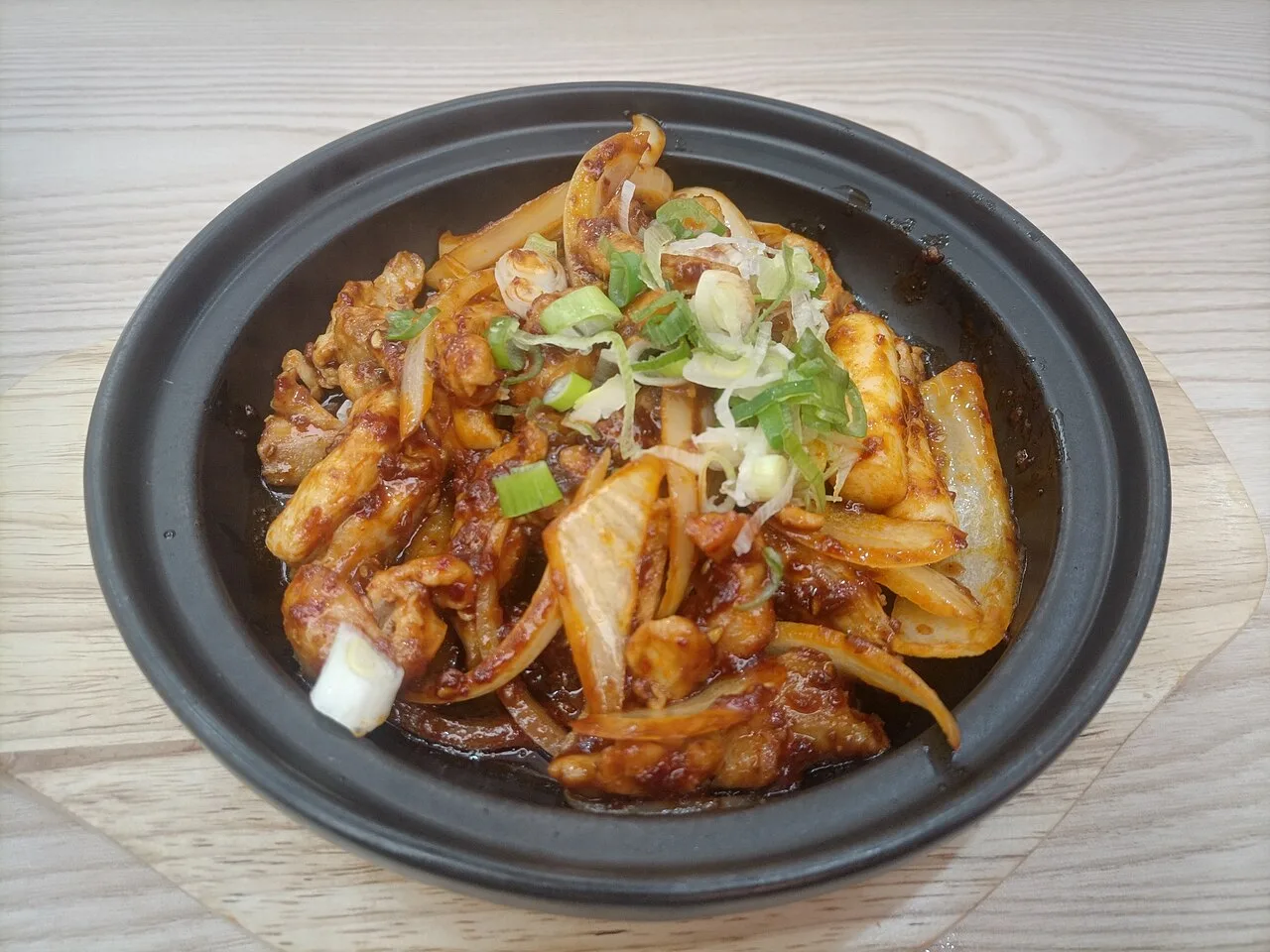
Fumikas Sagisavas · CC0 1.0 · Source · Resized; converted to WebP; metadata removed; no crop
Published menu examples
Individual source examples, not a current quote or nationwide average. Check the source date, unit, minimum order and extras; a posted price does not establish today's opening hours.
깜돈흑돼지 (Kkamdon)
Jeju Black Pork
흑돼지 오겹살
₩20,000
- Order unit
- 200 g (one portion)
- Minimum
- Not confirmed in source
- Included / extra
- Article mentions bean sprout salad, steamed egg and salad; rice unknown
- Source location
- Jeju City
- Source date
- Article 2025-10-01; page updated 2026-09-28; price date unknown
- Checked
Published example; confirm price and conditions before ordering.
Original source두툼한고기돈돼지 제주 함덕점
Jeju Black Pork
흑돼지 목살/오겹살
₩20,000
- Order unit
- 200 g (one portion)
- Minimum
- Not confirmed in source
- Included / extra
- Article says kimchi stew is provided with meat; rice unknown
- Source location
- Jeju City, Hamdeok
- Source date
- Article 2025-10-01; page updated 2026-09-28; price date unknown
- Checked
Published example; confirm price and conditions before ordering.
Original source한라축산정육식당 노형점
Jeju Black Pork
흑돈 오겹살/목살
₩6,800
- Order unit
- Per 100 g
- Minimum
- 300 g
- Included / extra
- Table fee extra: middle-school age and older ₩4,000; elementary ₩3,000; preschool free. Rice unknown.
- Source location
- Jeju City, Nohyeong
- Source date
- Article 2025-10-01; page updated 2026-09-28; price date unknown
- Checked
Published example; confirm price and conditions before ordering.
Original source
Before you order
- Utensil drawer, water station and self-service signs identified
- A call button used only if present, or staff called politely
- Refill item distinguished from a separately ordered dish
- Any table-setting or extra-rice charge checked before ordering
- Raw-meat and cooked-food utensils kept separate
- Payment location and timing followed for this venue
- Separate-payment request made before the transaction starts
Questions travelers ask
Do I need to leave a tip?
Ordinary tipping is not generally expected in Korea, according to tourism guidance. A listed service or table-setting charge is different from a voluntary tip. Check an unfamiliar bill item rather than assuming a fixed tipping percentage.
Are all banchan refills free and unlimited?
Common meal service may include refills, but do not extend that to every plate or an unlimited order of a special menu dish. Ask what the venue refills, whether it is self-service and whether the requested item has a charge.
Where are the spoon, chopsticks and water?
They may be in a visible table drawer or at a marked self-service station. If you cannot find them, ask staff. Not every table has the conveniences shown in visitor guides.
When do I pay?
Follow the restaurant's instructions: a kiosk or counter can take payment before food, while other venues settle the bill after eating. Do not order again merely because you expected another payment step.
Can friends use several cards for one table?
Ask before the transaction begins. Staff or equipment may not support the split you want. Agree an alternative within your group and check the total before payment.
Must I finish a side dish I cannot eat?
Do not force yourself to eat an unsuitable item to follow a supposed rule. Ask for a smaller amount or leave it. For an allergy, do not simply remove a visible piece and assume the remaining food is safe; use the allergy guide.
Continue with a specific dish or area
References
- About Korean Food: Visiting a Korean restaurant · Korea Tourism Organization
Checked: 2026-11-24 - Four Steps to Food Safety: Separate · FoodSafety.gov
Checked: 2026-11-24 - 제주 착한가격업소: 흑돼지 · Jeju Tourism Organization
Checked: 2026-11-24
More dish notes and earlier phrase examples
Side dishes are the small plates
Besides the main dish, a restaurant often sets down several small plates. The set may be kimchi alone, or it may mix braised vegetables and dressed vegetables. Some tables are set before you sit, and some plates arrive after you order. This page does not assume a bell tells you when to start. At many restaurants you can eat once the plates are down. Leaving food does not by itself make the meal rude. Do keep in mind that a plate you have already touched is unlikely to be replaced again and again.
Refills depend on the restaurant
Show a nearly empty plate, and many restaurants will refill it. Some will not, some charge, and some refill only the kimchi. Unlimited free refills are not a rule you can count on. A refusal is that restaurant's practice. Refill prices are not listed here. If a spicy plate is one you do not want more of, skip the refill line. Use the “just a little” line on the ordering guide, or leave that plate as it is.
Find the water before you assume there is none
Some tables already have cups. Some have a pitcher. Some rooms keep a water dispenser by the wall, and some sell bottles only. Before you decide the table has no water, look along the wall and near the counter. If you see a dispenser, pour it yourself. If you cannot find one, ask. Tap water is not automatically free. Some places let you know a bottle costs money only after you open it. A cafe drink and a restaurant dispenser are different setups.
Spoons, chopsticks, and sharing a plate
Many people eat rice and soup with a spoon, and side dishes or grilled meat with chopsticks. Using only one of them is not something the staff are sure to correct. Keep chopsticks from standing upright in the rice. A soup bowl can stay on the table. When a large plate is meant to be shared, keep your own chopsticks out of the common pile and use serving chopsticks or an empty plate if either is there. Some tables have no serving chopsticks. Leave your own spoon out of the shared plate.
- Samgyeopsal (Korean Grilled Pork Belly)The grill belongs to the table. Move cooked meat to your own plate, then wrap it. Leave meat someone else has not taken yet.
- Dakgalbi (Spicy Stir-fried Chicken)A wide griddle is often shared by the party. Take a share with serving chopsticks or an empty plate. Whether a single portion exists is on the solo dining guide.
- Bossam (Boiled Pork Wraps)You wrap the meat, the leaf, and the kimchi at the table. Taking leaves one at a time is easier on the people beside you than lifting a stack.
- BibimbapLeave a stone pot or a hot bowl on the table while you mix. Whether you add chili paste is a spice decision, covered on the non-spicy page.
Sit-down meals are often paid after you eat
At a restaurant that serves side dishes, paying the whole bill when you order is less common than paying after the meal. Some places bring the card reader to the table, and some send you to a counter by the door. Wait until you are called before you stand up. Leave the kitchen and its tickets alone. The machine will not split a bill on its own. If you want separate payments, say how many people before you pay. Adding a tip on top of the meal is not the usual practice at this kind of restaurant. If the card screen offers an extra amount you cannot read, leave it unpressed. Some bills include a service-charge line. Point at a line you cannot read and ask before you pay. Rates are not listed here.
A stall and a cafe follow a different rhythm
A cup or a bag on the street is often paid when it is handed to you. The visit is not built around a long sit. Cafes often take payment when you order. “Pay after you eat” on this page is for a restaurant that seats you and brings side dishes. Buying one piece at a stall is covered on the street-food page.
Short Korean for the table
Dish names, card payment, receipts, and asking for more water are on the ordering guide. This page adds calling someone over, a side-dish refill, where the water is, starting the bill, splitting the bill, and asking for a spoon. The restaurant can refuse.
The romanization is a guide. It has not been checked line by line by a native speaker, and it is not a precise transcription. juseyo matches the ordering guide, ttaro starts short and tight, and isseoyo is the “there is” ending.
- 저기요ReadingjeogiyoMeaningUse this to call staff from your seat. It does not replace the dish name.
- 반찬 더 주세요Readingbanchan deo juseyoMeaningMore side dishes, please. Hold up the empty plate as you say it. Some restaurants will not refill, and some charge.
- 물 어디 있어요?Readingmul eodi isseoyo?MeaningWhere is the water? Use it when you cannot find a dispenser.
- 계산해 주세요Readinggyesanhae juseyoMeaningThe bill, please. Say it after the meal, at the table or at the counter.
- 따로 계산해 주세요Readingttaro gyesanhae juseyoMeaningSeparate bills, please. Say it before you pay. Some machines cannot split the total.
- 숟가락 주세요Readingsutgarak juseyoMeaningA spoon, please. Use it when the table has only chopsticks.
Finer points live on other pages
Lines for party size, pointing at a dish, card payment, and a receipt
Whether one person can sit is on the solo dining guide
Food you take and eat on the street is on the street-food guide