Non-Spicy Korean Food
Bowl color is only part of the picture. A white soup can still come with a small dish of kimchi, and chili paste may be yours to add. This page separates two kinds of dishes: heat you can leave until the end, and red sauce that is the dish. Ingredient lists stay on each dish page.
What to do
Read the complete menu name
Look for 매운 (spicy), 얼큰 (peppery/spicy), 불 (fiery, often in a dish name) and 김치. Treat these as reasons to ask, not a universal heat scale. A restaurant may offer both plain and spicy versions of the same food.
Locate the sauce before changing the order
Ask whether chili is in the cooked broth, marinade or garnish. A separate gochujang dish can be left out; taking chili off the top does not remove seasoning already cooked into the food. Ask for sauce on the side before the kitchen prepares the order.
Confirm the alternative, then order
If the kitchen uses a prepared spicy base, switch to an available plain soup rather than relying on 덜 맵게 (less spicy). For bibimbap, ask whether gochujang can arrive separately; the request does not remove seasoning already used on individual toppings.
Keep table seasonings separate
Check the small sauce dishes, kimchi, chili, mustard and pepper before adding them. With a group, put spicy sauces into individual dishes instead of changing a shared bowl. If avoiding an allergen, use the allergy guide before tasting anything.
Choose by how the kitchen seasons it, rather than by the photograph
| Situation | Practical request | What the request cannot establish |
|---|---|---|
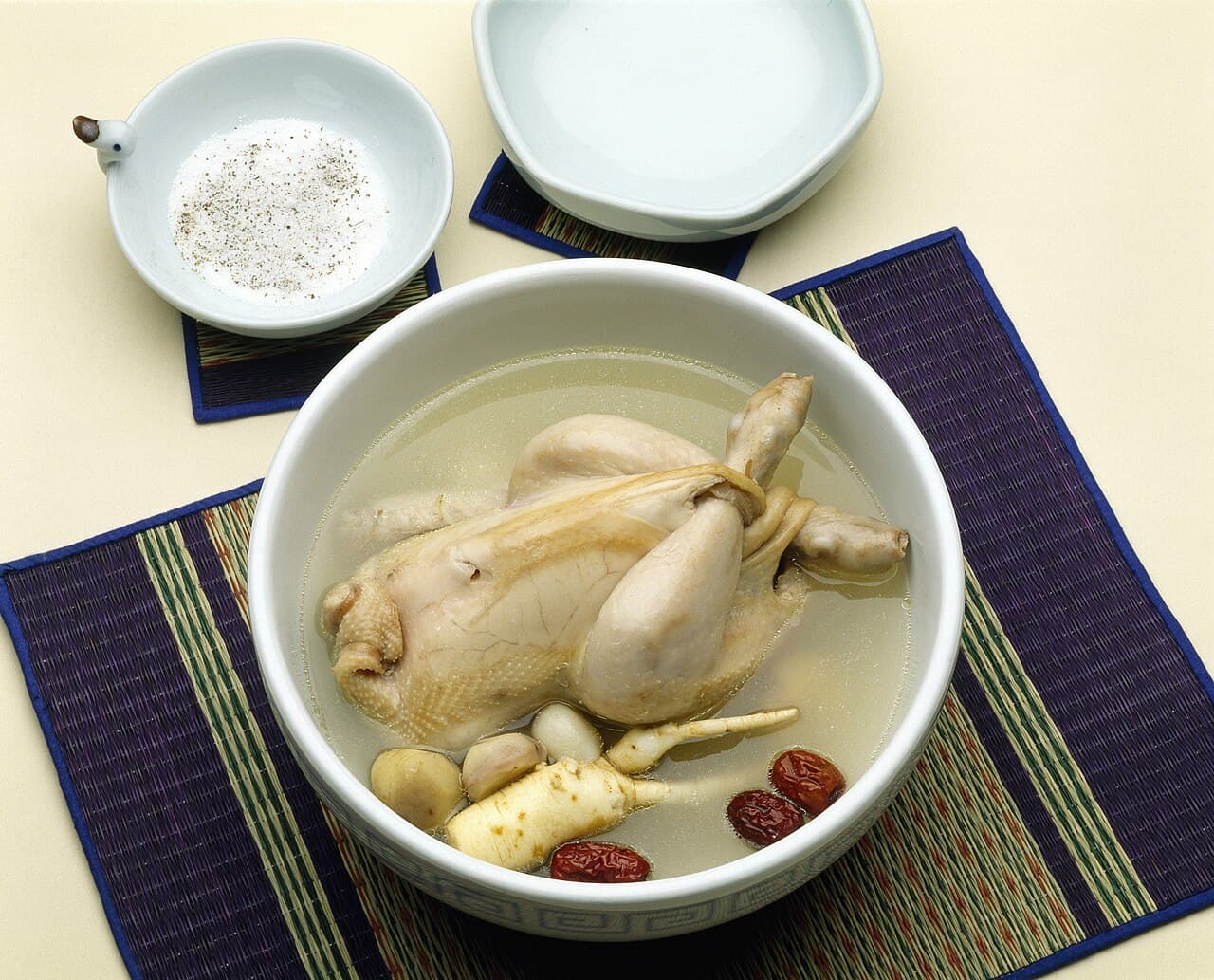
| Plain seolleongtang or samgyetang | Ask whether chili or pepper is already in the broth; keep spicy sides separate | White broth is not proof of zero heat or allergy safety |
| Bibimbap before mixing | Ask for gochujang separately before preparation | Already seasoned vegetables and meat do not become unseasoned |
| Gimbap selection | Check the exact filling; ask about chili and spicy fishcake | An ordinary-looking roll can still contain a spicy filling |
| Red tteokbokki or kimchi stew | Ask if a separate mild recipe exists; otherwise change dishes | Removing a garnish cannot undo a cooked sauce |
| Cold noodles with condiments | Ask for mustard and spicy sauce separately | A cold dish can still be spicy; vinegar is sour, not a chili indicator |
Korean for this situation
- 매운 음식을 잘 못 먹어요.I do not handle spicy food well.
When to use it: Explain your tolerance before choosing a dish.
Check first: This describes heat tolerance; it does not communicate a food allergy.
- 고춧가루나 고추장이 이미 들어가 있나요?Is chili powder or gochujang already in it?
When to use it: Find out whether a broth or sauce is prepared with chili.
Check first: Point to the exact dish; the answer does not cover every possible seasoning.
- 고추장 따로 주세요.Please serve the gochujang separately.
When to use it: Ask before bibimbap or another adjustable dish is prepared.
Check first: Separate sauce does not remove chili already used in the toppings.
- 겨자도 따로 주세요.Please serve the mustard separately too.
When to use it: When ordering noodles or another dish with mustard.
Check first: Mustard has its own pungency. This is not an allergy-control request.
- 맵지 않은 다른 메뉴가 있나요?Is there another menu item that is not spicy?
When to use it: Choose an alternative when the sauce cannot be changed.
Check first: Confirm the specific replacement; do not assume every item in that category is mild.
Situations and responses
A child wants bibimbap while others want chili
You are ordering for a mixed-tolerance group and the bowls have not been prepared.
Request the child's gochujang separately and ask whether the toppings already contain chili. Keep the adults' sauce in their own bowls. Do not use a child's age as evidence that the kitchen's mild version will suit them.
The kitchen says the stew base is already made
You asked for less heat, but staff explain that the red broth cannot be changed.
Ask for another available non-spicy dish and confirm that choice before ordering. A plain soup is a candidate, not a guarantee. Do not plan to solve the problem by picking out chilies after serving.
The noodles are not red but still feel pungent
You want to avoid mustard or pepper as well as chili.
Name those condiments separately and ask for them on the side. Keep taste preference separate from an ingredient restriction; if the concern is an allergy, switch to the detailed ingredient and cross-contact questions.
Food examples
These photographs illustrate food or serving formats. They do not establish ingredients, allergy safety, local availability or a shop's current portion.
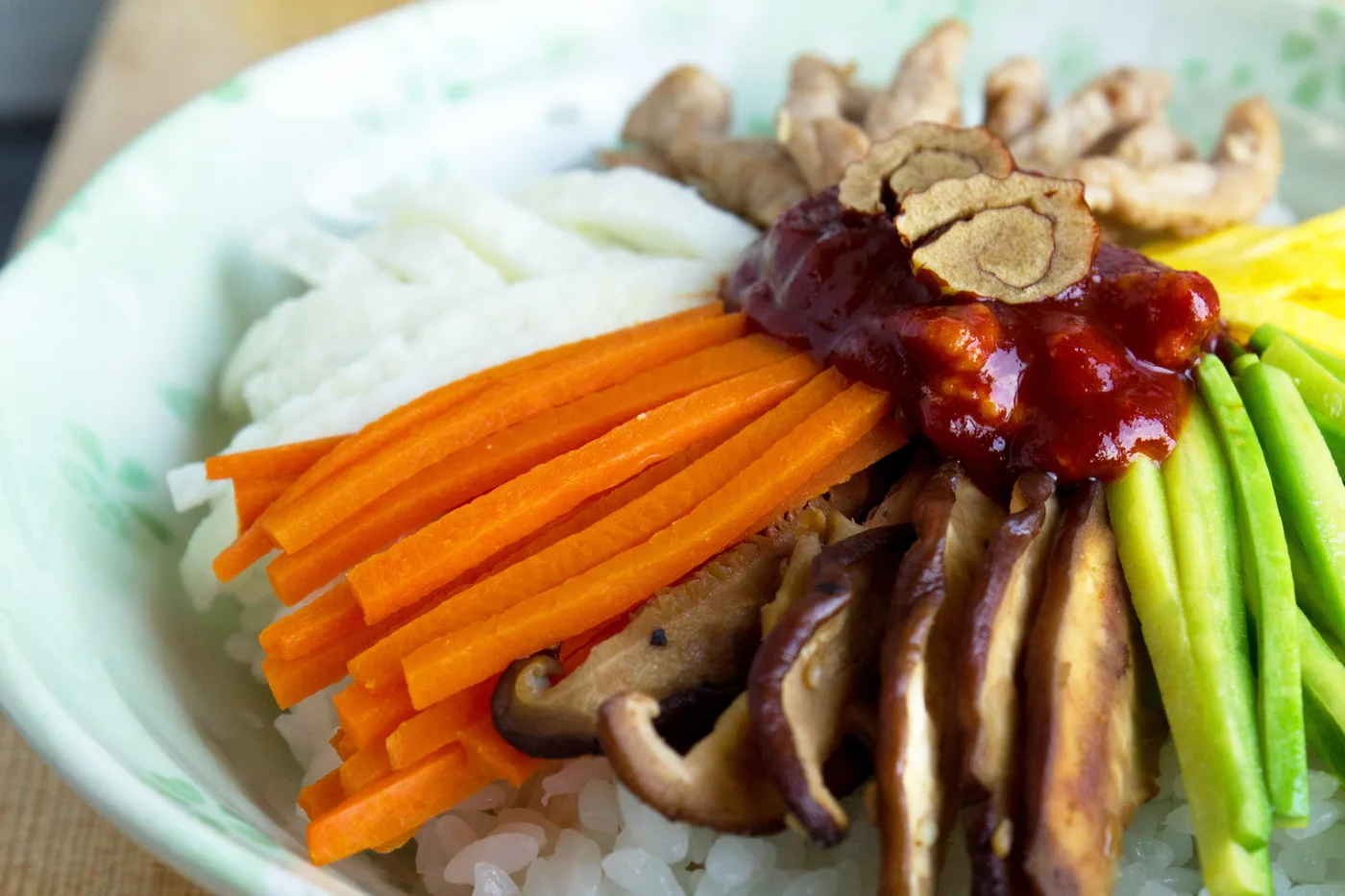
Chloe Lim · CC BY 2.0 · Source · Resized; converted to WebP; metadata removed; no crop
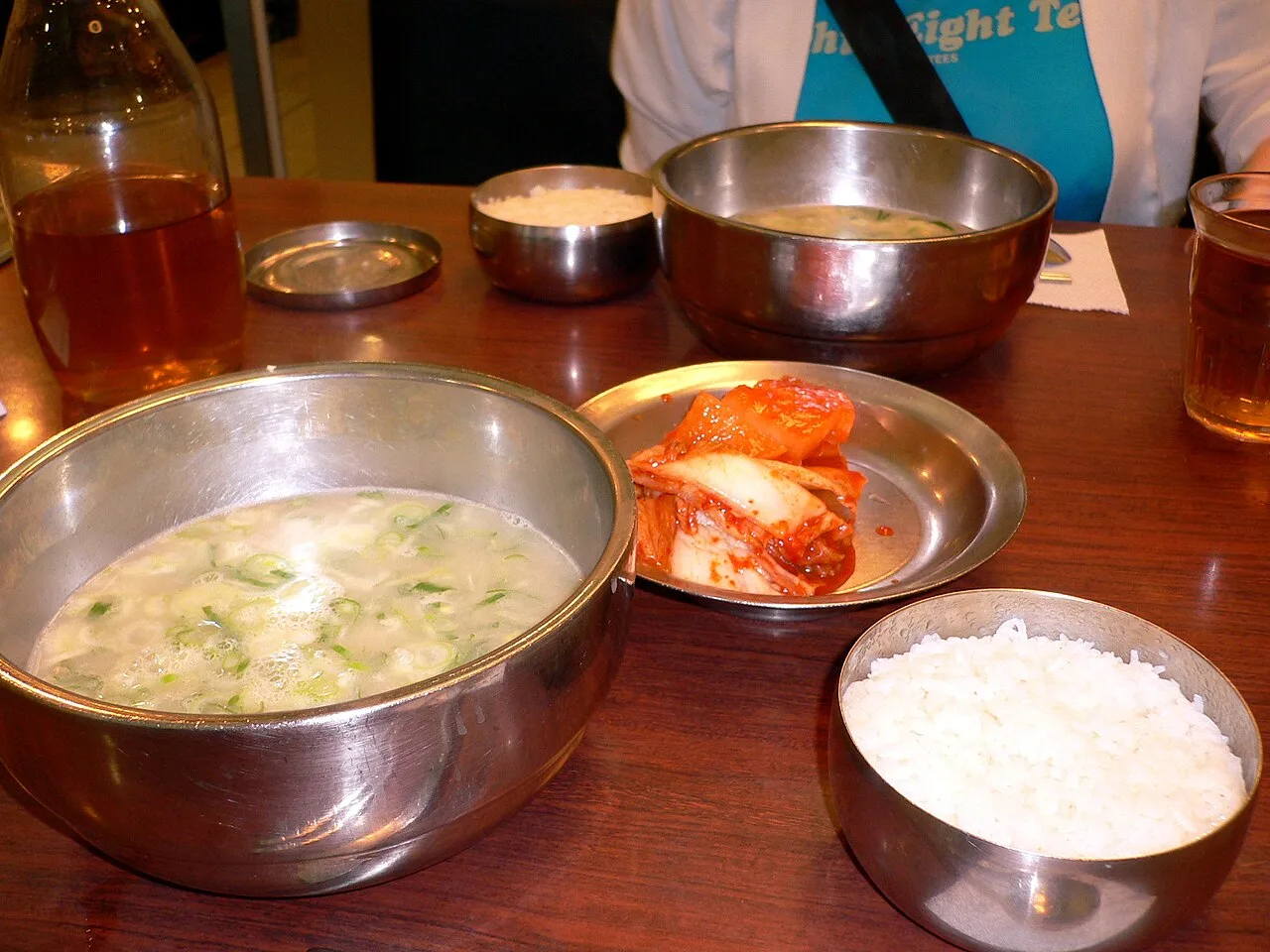
Satomi Abe · CC BY-SA 2.0 · Source · Resized; converted to WebP; metadata removed; no crop
Published menu examples
Individual source examples, not a current quote or nationwide average. Check the source date, unit, minimum order and extras; a posted price does not establish today's opening hours.
남포삼계탕 (Nampo Samgyetang)
Samgyetang (Ginseng Chicken Soup)
삼계탕
₩17,000
- Order unit
- One whole-chicken samgyetang order
- Minimum
- Not confirmed in source
- Included / extra
- Rice, sides and extras not explicitly itemized; confirm before ordering
- Source location
- Busan, Jung-gu Nampo
- Source date
- Price date unknown
- Checked
Published example; confirm price and conditions before ordering.
Original source
Before you order
- Check the full menu name, including words after the dish name.
- Ask whether the spicy seasoning is already in the base.
- Make side-sauce requests before preparation.
- Choose a backup dish if the recipe cannot change.
- Keep kimchi, chili sauces and mustard out of the shared bowl.
- For allergies, confirm ingredients and cross-contact before any tasting.
Questions travelers ask
Does 덜 맵게 mean completely non-spicy?
No. It asks for less heat relative to the restaurant's recipe. Ask whether chili is already present and whether a separate non-spicy dish is available.
Can every bibimbap be ordered without gochujang?
It is a useful request before preparation, but the kitchen may already have added sauce or seasoned the toppings. Confirm what can actually be kept separate.
Is a white soup always the safest choice?
It may be a useful candidate for avoiding chili, but color cannot establish ingredients, pungency or allergy safety. Ask about the specific broth and side dishes.
Will a cream or cheese version of tteokbokki be mild?
Do not assume so. A cream or cheese variation may still use a chili-based sauce. Ask about its prepared base rather than judging its color.
Does the price example guarantee a non-spicy version?
No. It shows one particular published samgyetang menu price. Recipe changes, sauces and availability must be confirmed separately; the example is not a nationwide average or a guaranteed current price.
Continue with a specific dish or area
References
- Jeonju Bibimbap · Korea Tourism Organization
Checked: 2026-11-24 - Visit Busan: Nampo Samgyetang menu · Busan Metropolitan City
Checked: 2026-11-24 - K-Foods in K-Dramas · Korea Tourism Organization
Checked: 2026-11-24
More dish notes and earlier phrase examples
Korean food is not all spicy
A red pot often uses chili. Salt-seasoned and soy-seasoned soups and meats sit alongside those pots. A white photo can still come with a small dish that is spicy. No dish here is a promise of zero heat. Before you order, see whether the heat is in the broth or in a sauce you add yourself.
Dishes where the heat can wait
For these five, many restaurants keep chili out of the base sauce. A separate spicy row can still exist, so read the name on that line. Flavor details are on each dish page.
- Seolleongtang (Ox Bone Soup)It is often a white soup you salt yourself. Look at the kimchi beside it as a separate item. Whether noodles are included is on the dish page.
- Samgyetang (Ginseng Chicken Soup)It is often a chicken soup you salt yourself, in a different bowl from a red stew. The ingredient details are on the dish page.
- Galbitang (Beef Short Rib Soup)It is often a beef soup that does not start from chili. If the photo is already red, ask about the heat before you order.
- BulgogiThe usual seasoning is soy. A row that says 매운 불고기 is a different heat level. The note on sweetness is on the dish page.
- Gimbap (Korean Rice Rolls)The basic roll is rice seasoned with sesame oil. A row whose name includes 김치 is a different item. Read the characters before you choose.
The base flavor, and the heat that arrives later
The flavor of the dish and the flavor that lands on the table later are two different things. A white-soup restaurant may still set down a small dish of kimchi. Barbecue meat can be soy or salt while the sauce you wrap with is spicy. If chili paste was meant to be added by you, and the kitchen mixes it in at the start, you cannot take it out later. Asking for no spice does not make the small dishes disappear. If you do not want one, point at that dish.
How to spot kimchi, chili paste, and green chili
김치 is usually a small dish of fermented cabbage. Treat each red dish on the table as its own item, and taste a little before you decide what it is. 고추장 is a red paste thicker than the soup. Once it is already on the rice, it is hard to pick off. 청양고추 is a thin, small green chili, often much hotter than it looks. Its thickness is different from a long scallion or a cucumber. If you see thin green rings in a stew, ask before you eat. Color alone does not identify an ingredient.
Korean to use in the restaurant
Say these before the kitchen mixes the dish. Once a red pot is on the table, the heat often cannot be walked back. The restaurant can also refuse. Party size, allergies, and payment are on the ordering guide and are not repeated here.
The romanization is a guide, split by word. It has not been checked line by line by a native speaker, and it is not a precise transcription. Lines shared with the ordering page use the same spelling. In gochujang ttaro, the start of ttaro is short and tight.
- 맵지 않게 해 주세요Readingmaepji anke hae juseyoMeaningPlease do not make it spicy. Say it when you order. This is not a promise of zero heat.
- 고추 빼 주세요Readinggochu ppae juseyoMeaningPlease leave out the chili. A red pot that is already cooked may be impossible to change.
- 청양고추 들어가요?Readingcheongyang-gochu deureogayo?MeaningDoes this have the small green chili? Point at the thin green rings as you ask.
- 고추장 따로 주세요Readinggochujang ttaro juseyoMeaningChili paste on the side, please. For dishes where you add the sauce yourself.
Dishes where the heat is hard to remove
In these dishes, chili or kimchi is often the dish itself. A request for no spice may be refused. If it is, switch to the white soups or the soy-seasoned meat above. After the dish arrives, taking out only the heat is difficult.
- Kimchi-jjigae (Kimchi Stew)It is often a pot boiled from ripe kimchi. Removing the kimchi makes it a different dish, so the restaurant may refuse.
- Tteokbokki (Spicy Rice Cakes)The red sauce is often the dish. A soy-sauce version of the rice cakes is not on every menu. Read that row.
- Sundubu-jjigae (Soft Tofu Stew)The usual bowl at many restaurants is a red pot. A mild version exists only when that restaurant agrees to change it.
- Dakgalbi (Spicy Stir-fried Chicken)The red sauce on the griddle coats the meat and the vegetables. After it arrives, taking out only the heat is difficult.
- Kimchi Fried RiceIt is often rice fried with kimchi. Treat it as a different plate from plain rice, and read the menu first.
Dishes whose names do not settle the heat
These differ from the red pots above. The same dish name can have a spicy row and a milder row. Read that row, and the sauce that arrives on the table later.
- BibimbapAt many restaurants the chili paste is yours to add. A bowl that arrives already red is a different heat level.
- Naengmyeon (Korean Cold Noodles)물냉면 is not built on chili paste. 비빔냉면 is the red-sauce bowl. Read the two rows as different dishes.
- Jjimdak (Braised Chicken)Some plates are braised with soy, and some are coated in red sauce. Look at the color before you order.
- Samgyeopsal (Korean Grilled Pork Belly)The meat itself is often free of chili paste. The wrap sauce and the kimchi can still be spicy on their own.