Korean Breakfast Guide
Many Korean restaurants serve the same lunch dishes in the morning when the door is open. A separate breakfast menu is not guaranteed. This page helps you choose a type of meal—soup, porridge, rice tray, gimbap, toast-style bakery food, or a sweet street snack—then points to dish pages for details. Opening times belong on the door or the shop’s own notice; if it is closed, eat somewhere else that morning.
What to do
Work backward from the journey
Before an early train or tour, decide whether you have time to sit down, wait for cooking, pay and reach the meeting point. Choose near your accommodation or departure point rather than crossing town for a dish. The examples here do not estimate queue or travel times.
Check the particular branch and date
Read the restaurant's own latest notice or contact it to confirm opening, closed days and when the dish is served. Cross-check the branch address. A map listing or old tourism article is a starting point, not proof that the door will be open on your visit.
Choose a format, not a compulsory breakfast menu
Compare a soup-rice bowl, porridge, a gimbap roll and a baekban set. Ask whether a morning-only menu applies and whether rice is included. For a short stop, confirm preparation or takeaway availability before committing to a cooked bowl.
Order with a backup for your timetable
If the shop is closed or the wait does not fit your departure, use another confirmed open option such as an accommodation breakfast or a shop selling labeled takeaway food. Avoid collecting perishable breakfast the previous night unless you can follow its refrigeration instructions.
Morning choices by time, format and the question that changes the order
| Option | When it may fit | Confirm at this restaurant |
|---|---|---|
| Gukbap or seolleongtang | A seated, substantial meal before a day out | Morning service, rice arrangement and seasoning already in the broth |
| Juk / porridge | A soft-textured bowl when you have time to sit | Preparation time, exact variety and seafood or meat stock |
| Gimbap | A portable rice option when the shop is open | Filling, one roll versus bundle, preparation and storage |
| Baekban / rice-and-side-dish set | A seated meal with several small dishes | Today's main dish, rice and soup inclusions, and minimum order |
| Gogi-guksu in Jeju | A noodle-bowl option near your accommodation or route | Actual morning opening; the published noodle price establishes no schedule |
Korean for this situation
- 오늘 몇 시에 문을 여나요?What time do you open today?
When to use it: Contact the particular branch before traveling there.
Check first: Confirm the date and address; this does not ask when the kitchen stops taking orders.
- 지금 식사할 수 있나요?Can I have a meal now?
When to use it: At the entrance, check whether meals are being served.
Check first: An open door does not necessarily mean that the full menu is available.
- 이 메뉴에 밥이 포함되어 있나요?Is rice included with this menu item?
When to use it: Check soup or set-meal pricing before ordering.
Check first: Point to the exact menu; it does not ask for an extra bowl of rice.
- 포장하면 얼마나 걸리나요?How long would it take to prepare it for takeaway?
When to use it: Check whether an order fits your departure time.
Check first: This is an estimate, not a booking or a guarantee of immediate service.
Situations and responses
An early train from Seoul
You are staying in Myeongdong and cannot risk a long breakfast detour.
The night before, identify an option near the accommodation and a fallback near departure, then recheck today's operation. A local porridge listing can provide a contact point, but do not infer that every porridge shop opens early. If there is no time to sit, ask about takeaway preparation before ordering.
A Jeju morning with a fixed departure
You want gogi-guksu before a tour, but the price example is from an official list rather than an opening-hours source.
Use the restaurant's address to check whether it fits your route, then confirm morning service directly. PRICE-27 records one published menu example; it does not establish that breakfast is available. Keep another open option near your accommodation.
One traveler wants a substantial meal; another wants something small
A group is comparing a baekban set with a roll of gimbap before sightseeing.
Check whether everyone must order a meal, whether sharing is permitted and what the set contains. A set price and a roll price buy different formats. Avoid assuming that accompanying side dishes or additional rice are included in every menu.
Food examples
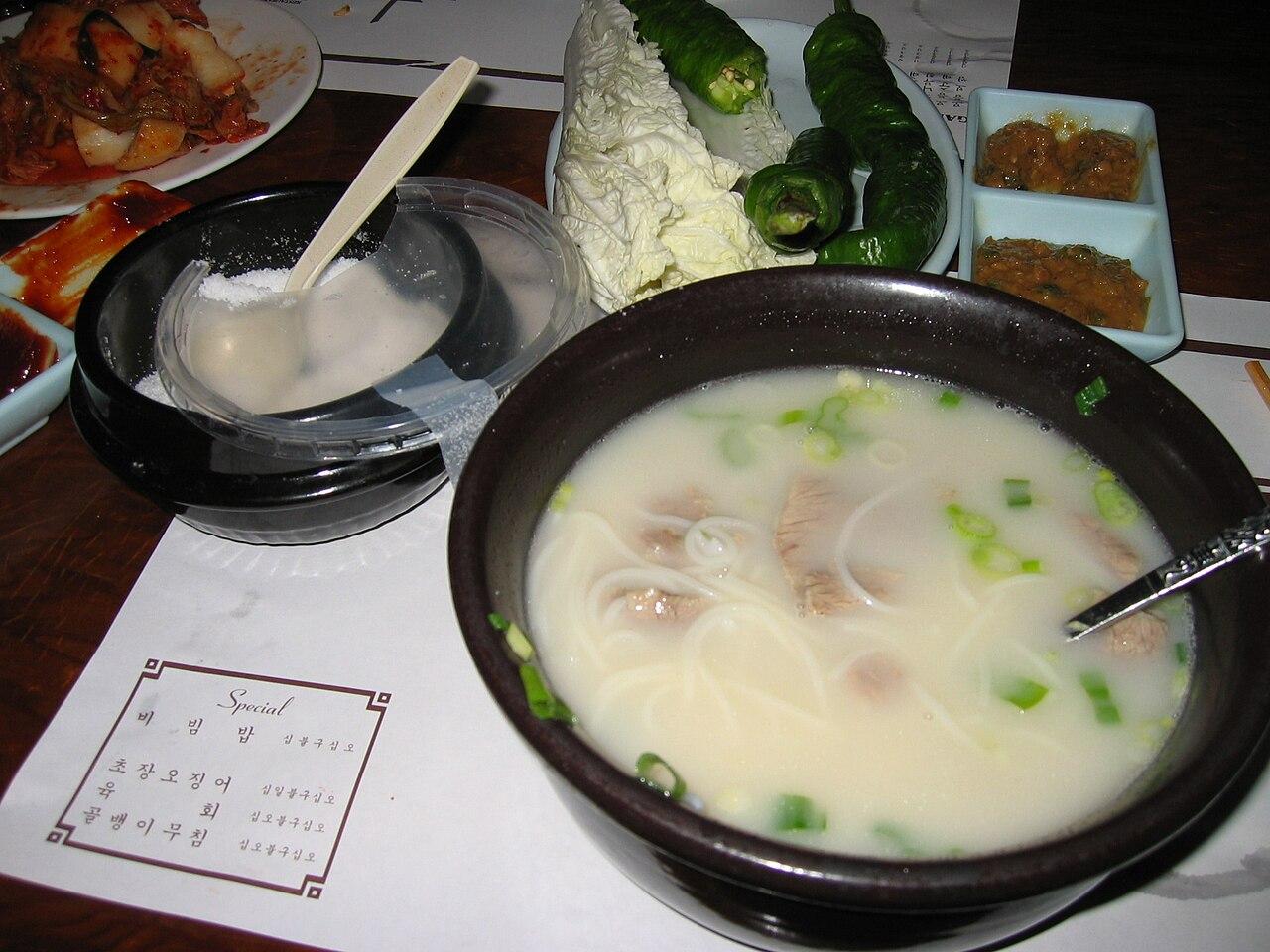
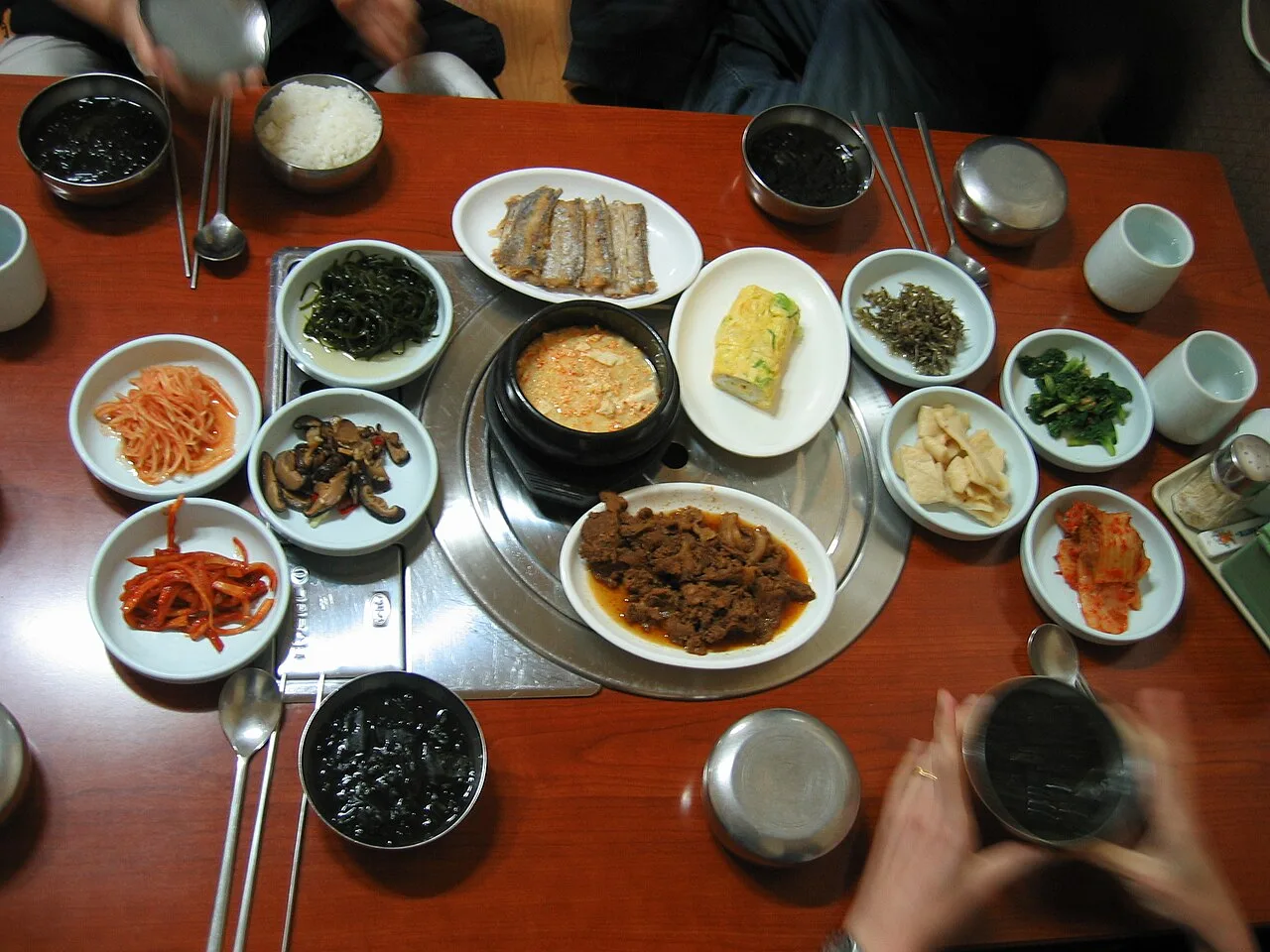
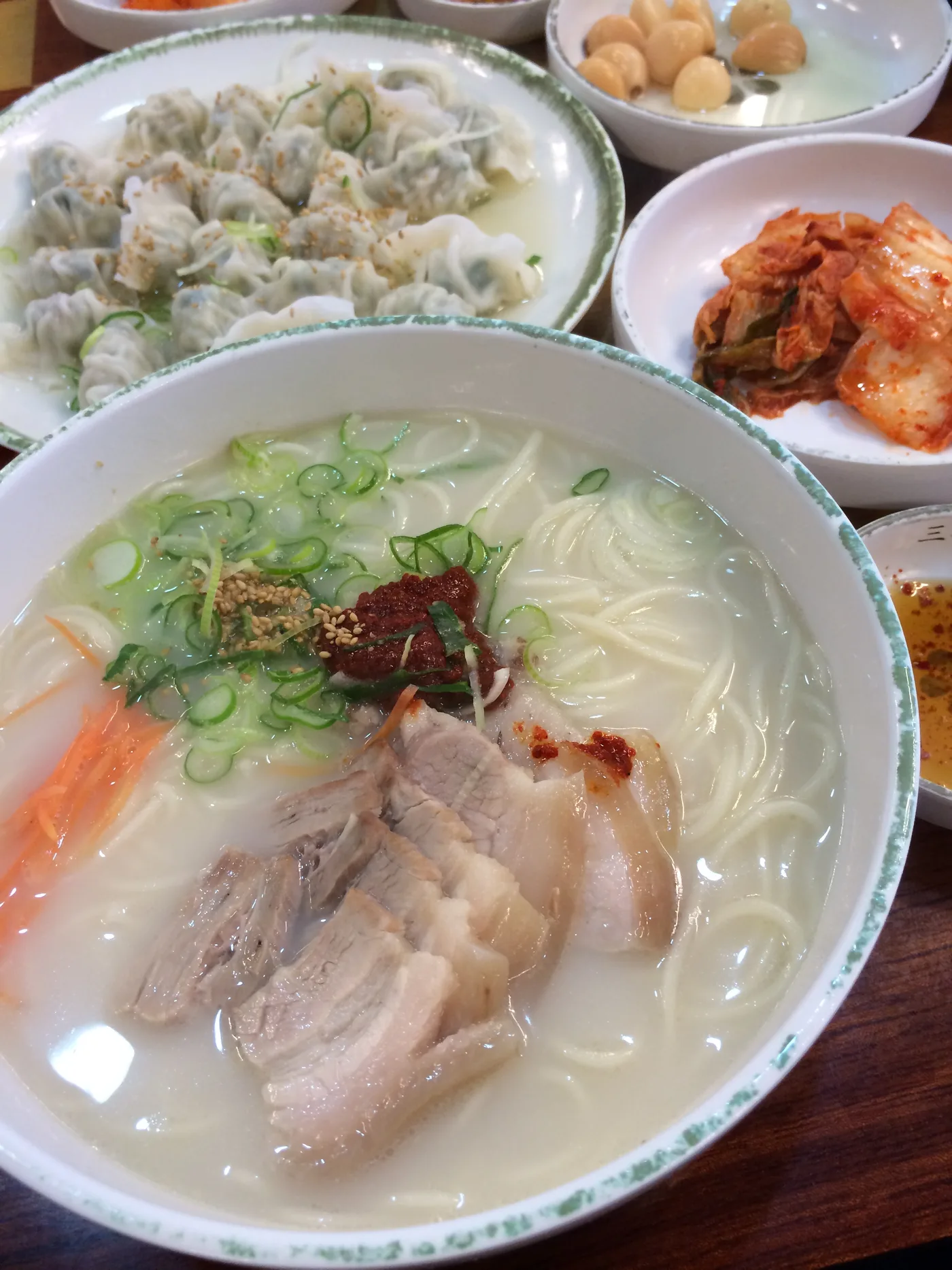
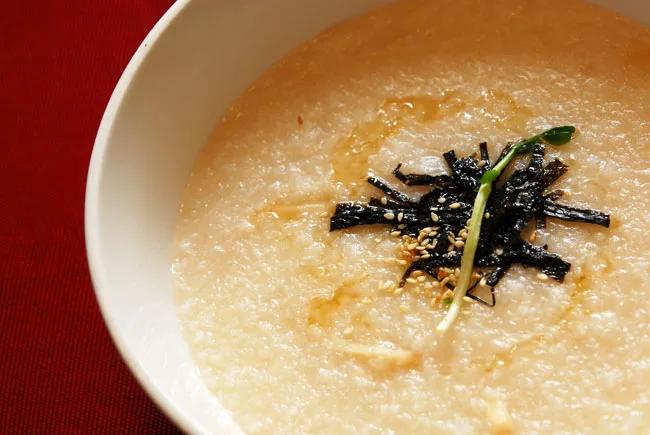
These photographs illustrate food or serving formats. They do not establish ingredients, allergy safety, local availability or a shop's current portion.
Juliana Ng · CC BY 2.0 · Source · Resized; converted to WebP; metadata removed; no crop
Narnars0 · CC BY-SA 3.0 · Source · Resized; converted to WebP; metadata removed; no crop
by ~Nisa at Flickr · CC BY-SA 2.0 · Source · Resized; converted to WebP; metadata removed; no crop
Published menu examples
Individual source examples, not a current quote or nationwide average. Check the source date, unit, minimum order and extras; a posted price does not establish today's opening hours.
남현순대
Gogi-guksu (Pork Noodle Soup)
고기국수
₩8,000
- Order unit
- Menu order; weight unknown
- Minimum
- Not confirmed in source
- Included / extra
- Rice, sides and extras not specified in list
- Source location
- Jeju City
- Source date
- Individual price-update date unknown
- Checked
Official good-price listing, inspected 2026-11-24. Confirm price and conditions before ordering.
Original sourceYennal Gimbap / 옛날김밥
Gimbap (Korean Rice Rolls)
Yennal Gimbap
₩2,500
- Order unit
- Menu order; count/weight unknown
- Minimum
- Not confirmed in source
- Included / extra
- Rice, sides and extras not individually confirmed
- Source location
- Jeongeup, Jeonbuk
- Source date
- Written November 2023
- Checked
Historical November 2023 example; not a current price quote.
Original source송정3대국밥 (Songjeong 3dae Gukbap)
Baekban (Rice with Side Dishes)
수육 백반
₩11,000
- Order unit
- One baekban set
- Minimum
- Not confirmed in source
- Included / extra
- Rice and soup served separately per article
- Source location
- Busan, Haeundae-gu Songjeong
- Source date
- Price date unknown
- Checked
Published example; confirm price and conditions before ordering.
Original source
Before you order
- Confirm today's branch, address, closed days and actual meal service.
- Allow for cooking, payment and reaching the departure point.
- Choose seated food or takeaway before ordering.
- Check the morning menu and rice or set inclusions.
- Ask about spice and ingredients before the dish is prepared.
- Keep a nearby confirmed open fallback and a safe storage plan for takeaway.
Questions travelers ask
Is there one standard Korean breakfast?
There is no single restaurant dish to order as the universal breakfast. Rice and soup, porridge, gimbap or a set meal are useful formats to compare, depending on the restaurant and your schedule.
Do all gukbap and porridge restaurants open early?
No. Check the particular branch and the day of your visit. A food category, an old article or a 24시 name is not enough to establish today's opening time.
Do the listed prices also apply at breakfast?
The examples document specific published dishes, units and source dates. They do not prove morning opening, a breakfast menu or a current price; verify those separately with the restaurant.
What should I choose if I cannot eat spicy food in the morning?
Ask about an available plain soup, porridge or gimbap filling and any seasonings already added. Kimchi and sauces may arrive separately. Mildness is not evidence of allergy safety.
Can I buy gimbap at night for the next morning?
Only with a reliable storage plan and the seller's instructions. Perishable takeaway needs prompt refrigeration; do not leave it in a room or bag overnight. Buying close to eating time avoids a long storage period.
Continue with a specific dish or area
References
- Seowon: porridge and restaurant-specific operating information · Korea Tourism Organization
Checked: 2026-11-24 - 제주특별자치도 착한가격업소 현황 · Jeju Special Self-Governing Province
Checked: 2026-11-24 - K-Foods in K-Dramas · Korea Tourism Organization
Checked: 2026-11-24 - Busan gukbap and sundae · Korea Tourism Organization
Checked: 2026-11-24 - 4 Steps to Food Safety · FoodSafety.gov
Checked: 2026-11-24
More dish notes and earlier phrase examples
Morning food types
Think in types before you hunt for a brand. Light options include gimbap, bakery toast sets you see near stations, and small sweet snacks. Filling sit-down meals include gukbap (rice in soup), clear beef soups, pork noodle soup, porridge, and baekban trays. Red stews can appear at breakfast too—treat them as spicy unless you check.
- Near the hotel: look for signs or maps that show 김밥, 국밥, 죽, or 토스트—menu words, not shop recommendations.
- Early open: walk until a lit sign or open door appears; this site lists no clock times.
- Takeaway: ask 포장 돼요? before they plate hot soup in a ceramic bowl.
Choose by your morning
These are practical matches, not medical advice. Any stomach issue still needs your own judgment and, when needed, professional care.
- Leaving soon: gimbap, hotteok, or bungeoppang you can carry—see the street-food guide for the handoff.
- Wanting something soft: porridge such as jeonbokjuk (shellfish—confirm first) or a mild clear soup you salt yourself.
- Wanting a full meal: seolleongtang, dwaeji-gukbap, galbitang, gogi-guksu, or baekban.
- Eating alone: prefer one-bowl soups or one roll; still ask if one person may sit (solo dining guide).
- Avoiding heat: start with pale soups and plain gimbap; skip kimchi-jjigae and red sundubu unless you accept chili.
Sit-down bowls and trays
Salt-yourself white soups and already-seasoned pots are different heat stories. Dish pages cover ingredients; use the notes only to shortlist.
- Seolleongtang (Ox Bone Soup)Pale beef-bone soup; you often add salt. A common mild-leaning sit-down pick when open.
- Dwaeji-gukbap (Pork Soup with Rice)Pork broth with rice in one bowl. Usually not a red stew; salt is often self-serve.
- Galbitang (Beef Short Rib Soup)Beef short-rib soup. Many bowls are not chili-based; check a red photo before ordering.
- Gogi-guksu (Pork Noodle Soup)Pork broth with wheat noodles—handy on Jeju mornings when the shop is open.
- Jeonbokjuk (Abalone Porridge)Abalone porridge. Soft texture, but shellfish is the main check—not “gentle for everyone.”
- Baekban (Rice with Side Dishes)Rice with several sides. Red side dishes can be spicy; judge each dish on the tray.
- Kimchi-jjigae (Kimchi Stew)Often available with rice. Ripe kimchi heat stays even in the morning.
- Sundubu-jjigae (Soft Tofu Stew)One-person soft-tofu stew is common, and many bowls are red—morning does not remove chili.
Food you can carry
Wrapped snacks fit trains and early walks. Window hours vary by day—confirm on arrival. Hand-off steps are on the street-food page.
- Gimbap (Korean Rice Rolls)One roll to go. Sesame-oil rice, not sushi. Kimchi-named rolls are separate.
- Hotteok (Sweet Filled Pancake)Sweet and hot inside. Ask about nuts before you buy.
- Bungeoppang (Fish-shaped Pastry)Fish-shaped pastry; filling is not fish. Availability changes by morning.
- Kimchi Fried RiceUsually a sit-down plate with egg on top—poor for walking; listed so you do not grab it by mistake.
Korean to ask in the morning
If there is no breakfast menu, point at the regular board. Solo seating and full takeaway lines are on the solo dining and ordering guides.
Romanization is a guide. dwaeyo stays short, matching the ordering page. isseoyo and yeogi match the other guides.
- 아침 메뉴 있어요?Readingachim menyu isseoyo?MeaningIs there a breakfast menu? If no, order from the regular menu.
- 포장 돼요?Readingpojang dwaeyo?MeaningCan this be takeaway? If they refuse, eat there or go elsewhere.
- 여기 먹어도 돼요?Readingyeogi meogeodo dwaeyo?MeaningMay I eat here? For a window stall when you need a place to stand.
- 덜 맵게 해 주세요Readingdeol maepge hae juseyoMeaningPlease make it less spicy. Works only when the kitchen can change the dish.